How to Clean Upholstery and Fabric Furniture
Read upholstery cleaning codes W, S, W/S, and X, test in a hidden spot, and spot-clean coffee, grease, pet accidents, and mud without rings or damage.
The short answer
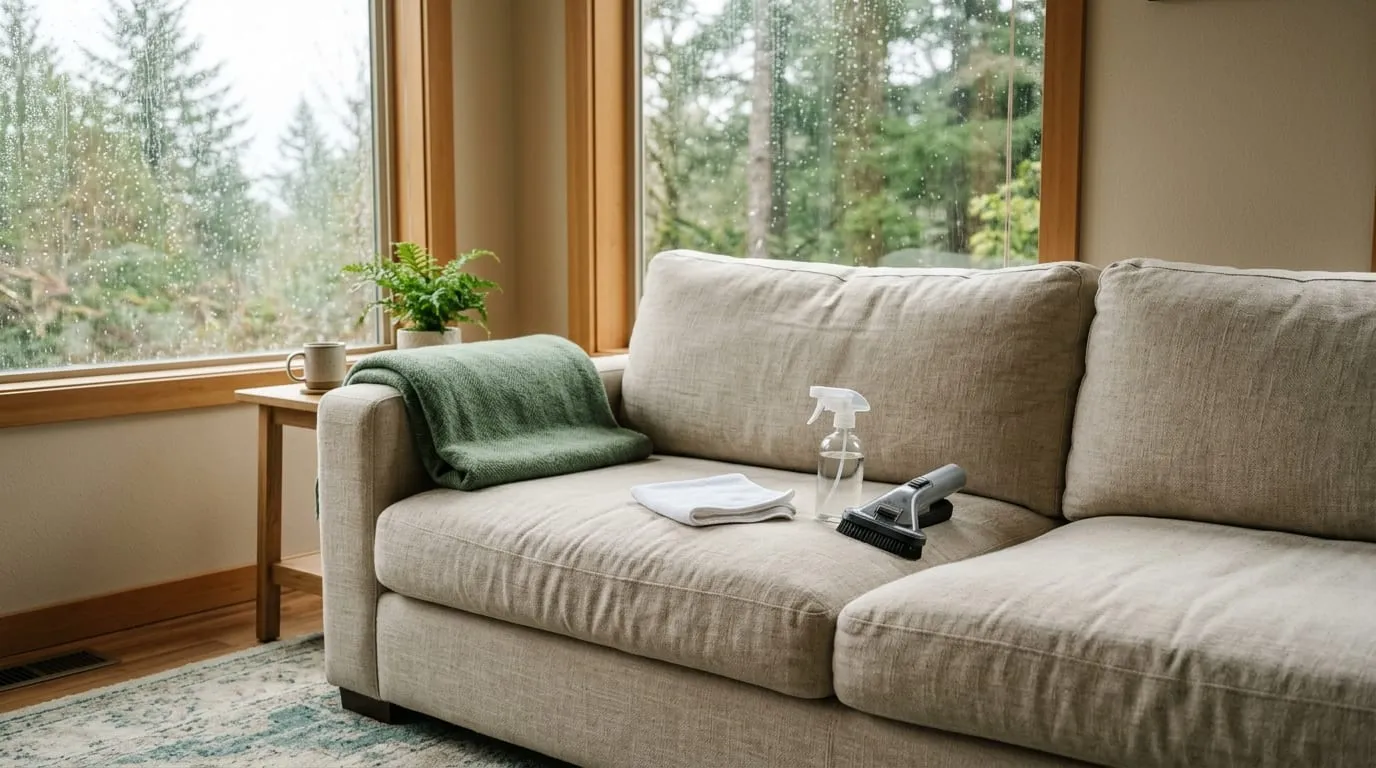
Find the cleaning code on the furniture tag first: W means water-based cleaner only, S means water-free solvent only, W/S allows either, and X means vacuum or brush only. Vacuum before any wet cleaning, test your cleaner in a hidden spot, use as little liquid as possible, blot rather than rub, and work from the outside of a stain toward the middle so it does not leave a ring.
- The code on the tag decides the method. The W, S, WS, and X definitions come from the IICRC S300 upholstery cleaning standard, as summarized by the Association for Contract Textiles (ACT).
- Even a W code does not mean soak it: the standard says do not over-wet, and that hot water extraction or steam cleaning is not a recommended method for W or WS fabrics.
- Always pretest in an inconspicuous spot, blot instead of scrubbing, and clean from the outside of a spot toward the middle to prevent rings.
- Pet urine needs cool water and an enzymatic cleaner, never heat, which can set the stain and odor.
- Leather is not a fabric code. Joybird advises weekly dusting, prompt blotting, and only leather-specific products.
This guide is for anyone with a fabric sofa, armchair, dining chairs, or headboard that needs more than a quick vacuum. The answer starts with a letter on a tag. W means water-based cleaners only, S means water-free solvent only, W/S allows either, and X means no liquid cleaners at all, just vacuuming or brushing. Whatever the code, vacuum first, test in a hidden spot, use as little liquid as you can, blot instead of rubbing, and work from the outside of a stain toward the middle.
Find the cleaning code first
Cleaning codes are printed on a tag under a seat cushion, on the seat deck, or under the frame. Many makers also list the code on the product page or swatch.
The definitions below come from the IICRC S300, the Standard Reference Guide for Professional Upholstery Cleaning published by the Institute of Inspection, Cleaning and Restoration Certification. The Association for Contract Textiles (ACT) reproduces the code text in its white paper on cleaning, and notes that the American Home Furnishings Alliance’s fabric standards committee has adopted the S300 standard. Fabric suppliers such as Famcor publish the same wording.
The four codes at a glance
| Code | What you may use | What you must not do | When to call a pro |
|---|---|---|---|
| W | Water-based upholstery shampoo or foam upholstery cleaner | Over-wet; use solvents; remove and launder cushion covers; hot water extraction or steam cleaning | When the piece is soiled overall |
| S | A water-free cleaning solvent | Use any water; saturate; remove covers and dry-clean them | Overall cleaning by a professional is recommended |
| W/S (also written WS or SW) | Upholstery shampoo, foam from a mild detergent, or a mild cleaning solvent | Saturate; remove and launder or dry-clean covers; hot water extraction or steam cleaning | When the piece is soiled overall |
| X | Vacuuming or light brushing with a non-metallic, stiff-bristle brush only | Use any water-based or solvent-based cleaner | For any stain beyond what vacuuming removes |
Two cautions apply to every code. First, the code text says to pretest a small, inconspicuous area before you proceed. Second, ACT notes that the AHFA committee considers the codes valuable but not, on their own, enough information to clean every fabric well. When the maker publishes its own care instructions, those win.
What each code means in practice
W fabrics tolerate water, but only a little. The code text says do not over-wet, and that steam or hot water extraction is not a recommended method. Joybird’s version for its W fabrics is a few drops of mild soap in warm water (it notes distilled water may be recommended), applied in a very small amount with a soft cloth, blotted, and left to air dry.
S fabrics must stay dry. Famcor notes that the wrong cleaning agent can deteriorate, discolor, or shrink upholstery fabric, and for S fabrics that agent is water. Use only a water-free solvent upholstery cleaner. Joybird’s directions for its S fabrics: ventilate the room first, apply a small amount, let it sit 5 to 10 minutes, agitate lightly with a fabric brush if needed, and protect wood floors and furniture legs with a drop cloth, wiping any drips off wood immediately.
W/S gives you both options. Start with the gentler water-based foam, and move to a solvent only if the stain is oily and the water-based approach does not lift it. Never apply both to the same spot back to back without letting the first dry and testing the second.
X means the fabric tolerates no cleaning liquids at home. Vacuum and brush. For a spill, blot immediately with a dry white cloth and stop there; anything more is a professional job.
Test in a hidden spot before anything else
Testing takes a few minutes and is the difference between a clean cushion and a bleached patch. CRI gives the same advice for carpet, and the upholstery code text requires it.
- Pick a hidden area with the same fabric: the back of the sofa near the floor, the underside of a cushion’s skirt, or fabric inside the deck.
- Apply the cleaner the way you plan to use it. Put a small amount on a white cloth, not directly on the fabric.
- Blot gently for about 30 seconds, then look at the cloth. Color on the cloth means the dye is not fast; stop.
- Let it dry completely. Famcor’s guidance is to wait until the product has dried before deciding whether to proceed, because rings, stiffness, and color change often show only after drying.
- Check in good daylight for a ring, a lighter or darker patch, shrinkage, or a change in texture or pile.
If anything changed, do not use that product on the visible stain.
Routine care: vacuum first, always
Vacuuming is the one step every code allows, and the code text recommends frequent vacuuming or light brushing to prevent overall soiling. It also keeps grit from being ground into the fabric when you spot-clean later.
The EPA advises vacuuming carpets and furniture every week, and using a vacuum with a HEPA filter on fabric-covered furniture to reduce dust buildup. AAFA gives the same weekly guidance for fabric furniture in homes with pets.
A good weekly pass:
- Remove loose cushions and vacuum both sides with the upholstery tool.
- Run the crevice tool along every seam, piping line, and tuft.
- Vacuum the seat deck and the gap where the back meets the seat; crumbs and hair collect there.
- Brush pile fabrics such as velvet or chenille lightly in one direction afterward. The code text notes pile fabrics may need brushing with a non-metallic, stiff-bristle brush to restore their appearance.
- Flip and rotate reversible cushions so wear and fading spread evenly.
In a wet climate, add one more habit: do not sit on upholstery in damp clothes or let a wet dog onto it. Fabric that stays damp in a cool room is slow to dry, and the EPA advises drying wet materials within 24 to 48 hours to prevent mold growth. Our guide to cleaning with pets in a wet climate covers stopping wet paws at the door.
How to spot-clean, code by code
The general method, from the code text and CRI, is the same for every liquid you are allowed to use:
- Act quickly. Blot a fresh spill immediately with a clean, dry, white cloth or plain white paper towel. Scrape off solids with a spoon or dull knife.
- Do not rub. Rubbing spreads the stain and roughens the fabric surface.
- Apply cleaner to the cloth, not the fabric, in a small amount.
- Work from the outside of the spot toward the middle. The code text says this prevents circling, the ring that forms when a stain spreads outward.
- Blot, then repeat with a fresh part of the cloth until no more transfers.
- Remove the residue. On W and W/S fabrics, blot lightly with a cloth dampened in clean water. ACT notes that rinsing is often overlooked and that cleaner residue left behind may be harmful to the material.
- Dry it. Blot with a dry towel, then let it air dry with good airflow. A fan helps on a gray day.
Never mix cleaning products or layer one over another. The Washington State Department of Health warns against mixing bleach with ammonia, acids, or other cleaners, and bleach is a poor choice for upholstery in any case. Our guide to cleaners, sanitizers, and disinfectants covers what is safe to combine (very little).
Common stains and what to do
The table gives a first move for common stains. It is general technique, not a guarantee; always test first and follow your cleaner’s label.
| Stain | First move | W fabric | S fabric | W/S fabric | X fabric |
|---|---|---|---|---|---|
| Coffee or tea | Blot right away with white towels | Tested water-based upholstery foam, blotted outside-in, then a clean-water blot | Water-free solvent spotter, applied to a cloth | Start with water-based foam | Blot dry only; call a pro if it remains |
| Grease or oil (food, lotion, hair oil) | Scrape off any solid, then blot | Water-based foam with a mild detergent; repeat lightly rather than soaking | Solvent spotter is the natural fit for oily stains | Try foam first, then solvent once dry if needed | Blot only; professional |
| Pet urine | Blot hard with layered paper towels | Cool water blot, then an enzymatic cleaner tested first; no heat | No water and no enzyme product unless the maker approves it; blot and call a pro | Cool water, then a tested enzymatic cleaner | Blot only; professional |
| Pet vomit or feces | Lift solids with a spoon or scraper, do not press in | Tested water-based foam or enzymatic cleaner | Solvent spotter after solids are removed, or professional | Water-based first | Remove solids, then professional |
| Mud | Let it dry completely, then brush and vacuum off | Treat any remaining mark with water-based foam | Treat remaining mark with solvent spotter | Either | Brush and vacuum only |
| Unknown stain | Blot, then wait | Test the mildest option first | Test solvent first | Start with water-based | Professional |
Pet accidents on upholstery
Urine deserves its own rule: no heat. Humane World for Animals warns against steam cleaning urine on carpet or upholstery because heat can permanently set the stain and odor by bonding the protein into man-made fibers. It also advises against ammonia and vinegar, since a strong smell may encourage a pet to mark the spot again. The ASPCA recommends an enzymatic cleanser designed to neutralize pet odors, and ASPCA Poison Control notes that enzyme-based cleaners can cause mild stomach upset if licked, so keep pets off the piece until it is dry.
On an S or X fabric, an enzymatic cleaner, which is water-based, conflicts with the code. Blot thoroughly and call a professional upholstery cleaner rather than risk a ring or a color change.
Odors
Work through these in order:
- Vacuum thoroughly, including the deck and seams, where hair and crumbs hold smells.
- Air it out. Open windows on a dry day and run a fan across the piece. In a Seattle winter, a dehumidifier in the room helps fabric dry fully.
- Treat the source, not the whole sofa. If one cushion smells, look for a specific spill or accident and treat it by code.
- For W fabrics, Joybird suggests adding a few drops of vinegar or baking soda to its mild soap and warm water mix to help with odors, used in a small amount and tested first.
- For pet odor, use an enzymatic cleaner where the code allows it.
- Protect it going forward. AAFA suggests slipcovers or blankets on fabric furniture that can be washed weekly in hot water, which also cuts down on pet dander.
A musty smell that returns after drying can mean moisture deep in the cushion or frame. That needs drying out, and if it persists, a professional.
Leather and microfiber
Leather
Leather is not covered by the W, S, and X codes. Joybird’s leather care guidance is a good baseline:
- Dust weekly with a microfiber cloth, or vacuum with a soft brush attachment.
- Blot spills immediately with a dry microfiber cloth, then treat with a leather conditioner once dry.
- Do not use cleaning products that are not made for leather.
- Keep leather out of direct sunlight, which fades and can crack it, and at least 12 inches from heat sources such as radiators and fireplaces.
- Watch for dye transfer from new jeans on light-colored leather.
Leathers are finished in different ways, so check your own maker’s instructions before using any product.
Microfiber and performance fabrics
“Microfiber” describes the fiber, not the cleaning method. The word alone does not tell you which code applies, so read the tag rather than assuming. The same goes for performance fabrics: many are marketed as easy to clean, but ACT reminds specifiers that no product is immune from soiling and staining, and that added finishes do not remove the need for routine cleaning. Follow the maker’s care page for the specific fabric.
Worked example: a W/S sofa, a coffee spill, and a dog
Consider an illustrative case: a three-seat sofa with a W/S tag, a light oatmeal woven fabric, and a dog that naps on the end cushion. On a rainy Saturday, someone spills half a cup of coffee with milk on the middle seat, and the dog’s cushion smells faintly. Times are estimates, not measurements.
- Coffee, minute one (5 minutes). Blot with white paper towels, pressing and lifting, until no more brown transfers. No rubbing.
- Test (15 minutes, mostly waiting). A water-based upholstery foam is tested on the back of the sofa near the floor and allowed to dry. No ring, no color on the cloth.
- Treat the coffee (10 minutes). Foam goes on a white cloth and is blotted from the outer edge of the stain toward the middle, three rounds. A cloth dampened with clean water removes the residue, then a dry towel blots it.
- Dry (several hours). A fan runs across the cushion. Because the spill had milk, the household checks for a sour smell the next day.
- The dog’s cushion (20 minutes). It gets a slow pass with the upholstery tool and crevice tool. No accident spot is found, so the smell is body oil and damp fur, not urine. The cushion is aired by an open window, and a washable throw goes on that end of the sofa from now on, washed weekly in hot water.
- Decision point. If the coffee shadow is still visible after drying, the next step is a solvent spotter tested the same way, since the tag allows it. If that fails, the sofa goes on the list for a professional clean.
The point is restraint: let each attempt dry before deciding on the next.
When to call a professional upholstery cleaner
The code text itself points to professionals for overall soiling on W and W/S fabrics, and recommends professional cleaning for S fabrics in general. Call one when:
- The fabric is coded X, or S and you do not have a solvent cleaner you trust.
- The piece is soiled all over, not just in spots. Spot cleaning one area of a dingy sofa often leaves a clean patch that looks worse.
- A stain has spread, ringed, or changed color after a home attempt.
- Urine has soaked into the cushion core or there is a lingering odor after drying.
- The piece is antique, silk, velvet you are unsure about, or valuable.
Ask whether the cleaner works to the IICRC S300 standard for professional upholstery cleaning, the standard that references the W, S, WS, and X codes, and whether they will test before cleaning. If your sofa sees pets, wet coats, and kids, our guide to how often to deep clean your home helps you decide when a professional clean fits on the calendar.
Common questions
Can I put my sofa cushion covers in the washing machine?
Usually not, even if they unzip. The code text summarized by ACT says W cushion covers should not be removed and laundered, and S covers should not be removed and dry-cleaned. Joybird adds that machine washing its covers voids the warranty unless the product says otherwise. Zippers are there for assembly, not laundry, unless the care tag says washable.
My sofa has no tag. What code should I assume?
Treat it as X until you know better: vacuum and brush only. Contact the maker or retailer with the model name, check the original paperwork, or look for a tag under the seat deck or on the underside of the frame. If you must treat a spill, blot it dry and test any cleaner on a hidden spot first.
Is it safe to use a carpet steam cleaner on upholstery?
Not as a default. The cleaning code text says hot water extraction or steam cleaning is not a recommended method for W and WS fabrics, and heat sets urine stains and odors. Overall wet cleaning of upholstery is a job for a professional furniture cleaner who works to the IICRC S300 standard.
How do I get a water ring out of fabric?
Rings usually mean too much liquid or a spot cleaned from the middle outward, which spreads the stain into a circle. On a W or WS fabric, try one light round of your tested water-based cleaner, blotting from just outside the ring toward the center, then dry it quickly with a fan. If the ring stays, or the fabric is coded S or X, call a professional rather than adding more liquid.
Sources and references
- Cleaning Resources and Considerations (ACT White Paper Series) , Association for Contract Textiles Accessed November 15, 2026
- Upholstery Fabric Cleaning Codes , Famcor Fabrics Accessed November 15, 2026
- Product Care , Joybird Primary source Accessed November 15, 2026
- Cleaning and Maintenance (Carpet for Homes) , The Carpet and Rug Institute Accessed November 15, 2026
- How to Remove Pet Stains and Odors Naturally , Humane World for Animals Accessed November 15, 2026
- Poisonous Household Products , ASPCA Animal Poison Control Center Primary source Accessed November 15, 2026
- Asthma Triggers: Gain Control , U.S. Environmental Protection Agency Primary source Accessed November 15, 2026
- Allergic to Your Pet? Learn About Dog and Cat Allergies , Asthma and Allergy Foundation of America Accessed November 15, 2026
- Dangers of Mixing Bleach with Cleaners , Washington State Department of Health Primary source Accessed November 15, 2026
- A Brief Guide to Mold, Moisture and Your Home , U.S. Environmental Protection Agency Primary source Accessed November 15, 2026
See something out of date or wrong? Tell the editors. Read how we work in our editorial policy.