How to Prepare Your Home for a Professional Cleaner
What to do before a house cleaner arrives, and what to skip: clutter, access and keys, Seattle parking, pets, valuables, instructions, and a printable checklist.
The short answer
Before a professional cleaner arrives, pick up clutter so surfaces and floors are reachable, sort out entry and parking, secure pets, put away valuables and anything fragile or sentimental, and write down your priorities and product preferences. You do not need to pre-clean: the cleaner's time is best spent on dirt, not on your belongings.
- Tidy, do not clean. Cleaners are paid to remove dirt; you are the only one who knows where your things belong.
- Decide on entry (home, key, lockbox, or door code) and parking a few days ahead, and tell the service exactly how both work.
- Put pets somewhere secure, and say so in writing, including any pet that may slip out the door.
- Put away cash, jewelry, medication, documents, and anything irreplaceable. Flag fragile items you want left alone.
- Write a short priority list for the first visit, and give feedback within the service's guarantee window.
A professional cleaner does their best work in a home that is reachable, not one that is already clean. The useful prep is about clearing the way: picking up clutter, sorting out how they get in and where they park, putting pets and valuables somewhere safe, and writing down what matters most to you. This guide covers what to do before the visit, what you can skip, what the first visit usually looks like, and how to give feedback afterward.
If you have not chosen a service yet, start with our guide to choosing a house cleaning service in Seattle, which covers licensing, insurance, and key handling. This article picks up after you have booked.
Clutter vs. cleaning: the one distinction that matters
Cleaners clean surfaces. They wipe, dust, scrub, vacuum, and mop. What they cannot do well, and what most services do not include, is decide where your belongings go. Every minute spent stacking mail or guessing which drawer a charger lives in is a minute not spent on the shower or the baseboards.
So the rule is simple: tidy, do not clean.
- Tidying means picking things up off floors, counters, tables, and beds so the surfaces underneath are exposed. That is your job.
- Cleaning means removing dust, grime, grease, and soap scum from those surfaces. That is what you are paying for.
You do not need to wipe the counters, scrub the toilet, or vacuum first. Some people feel embarrassed and pre-clean; it only shifts the visit’s effort toward less important areas. If the home is far behind, say so when you book. A first clean that is closer to a deep clean takes longer and may be quoted differently, and our guide to how often to deep clean explains what that usually involves.
What to pick up
- Floors: shoes, toys, bags, laundry, cords, pet toys, anything a vacuum could swallow.
- Kitchen counters: mail, small appliances you rarely use, groceries, dishes (see below).
- Bathroom counters and tub ledges: toiletries, razors, hair tools, bath toys.
- Beds: clothes and items on top, so the bed can be made or linens changed if that is in scope.
- Tables and desks: papers you do not want moved. Better yet, put them in a drawer.
A quick method that works: walk through with one laundry basket per room, drop everything loose into it, and set the basket in a closet. You can sort it later.
Dishes
Ask your service whether dishes are included. Many standard cleans do not cover a full sink. If they are not included, load the dishwasher or wash them before the visit; otherwise the sink and the counter around it cannot be cleaned.
Access: keys, lockboxes, and door codes
Decide how the cleaner will get in at least a few days ahead, and put it in writing.
| Entry method | Works well when | Things to settle in advance |
|---|---|---|
| You are home | First visit, or you work from home | Which room you will be in, and whether you mind noise |
| Key handed to the service | Recurring visits with one company | How keys are stored and labeled (never with your address), and how they are returned if you stop |
| Lockbox | No one is home and you want a key to stay on site | Where it is, the code, and whether you will change the code if service ends |
| Smart lock or keypad code | You can create a separate code | A code just for the service, which you can delete at any time |
| Building concierge or front desk | Condos and larger apartment buildings | Whether the desk needs the cleaner’s name in advance, and where to check in |
Apartment and condo buildings add a second layer. Tell the service about the lobby door, the buzzer or call box, elevator access (some buildings require a fob), and whether there is a service entrance. If your building needs advance notice of visitors, give it.
If you have an alarm, either disarm it before the visit or give the service a separate user code, and tell them exactly where the panel is and how long they have.
Parking: the Seattle reality
Parking is a bigger part of a cleaning visit in Seattle than many people expect. A cleaner carrying a vacuum, a caddy, mops, and a bucket needs to park close enough to haul it in, and in many neighborhoods that is hard on a weekday.
What to tell the service:
- Where they can park. Your driveway, a guest spot in the garage, an alley pad, or the nearest legal street parking. If you have a driveway, say whether they may block your car in.
- Restricted Parking Zones. Many Seattle neighborhoods are Restricted Parking Zones (RPZs), where non-permit cars face time limits. SDOT lists a guest permit (one per address, issued as a hangtag that can move between vehicles) and one-day short-term permits, available in all zones except Zones A and B, which SDOT says “may be used by both residents and visitors.” If you have one of these, tell the service whether it will be left for them and where. Check SDOT’s current rules for your zone.
- Paid parking. If your street has pay stations, say so, and ask whether parking is billed to you. Practices vary between companies.
- Hills and stairs. If the closest spot is down a steep block or up a long flight of stairs, mention it. It affects how long the setup takes.
A few city rules are easy to trip over. SDOT says no parking in front of or within 5 feet of the edge of a driveway or alley, and that a vehicle may not stay on a city street for longer than 72 hours. Neither is likely to matter for a cleaning visit, but a cleaner who parks across your neighbor’s driveway to save time can cause a problem for you.
Pets
Most cleaners like animals, but a dog greeting every trip to the car, or a cat darting out an open door, slows the visit and can be dangerous for the pet.
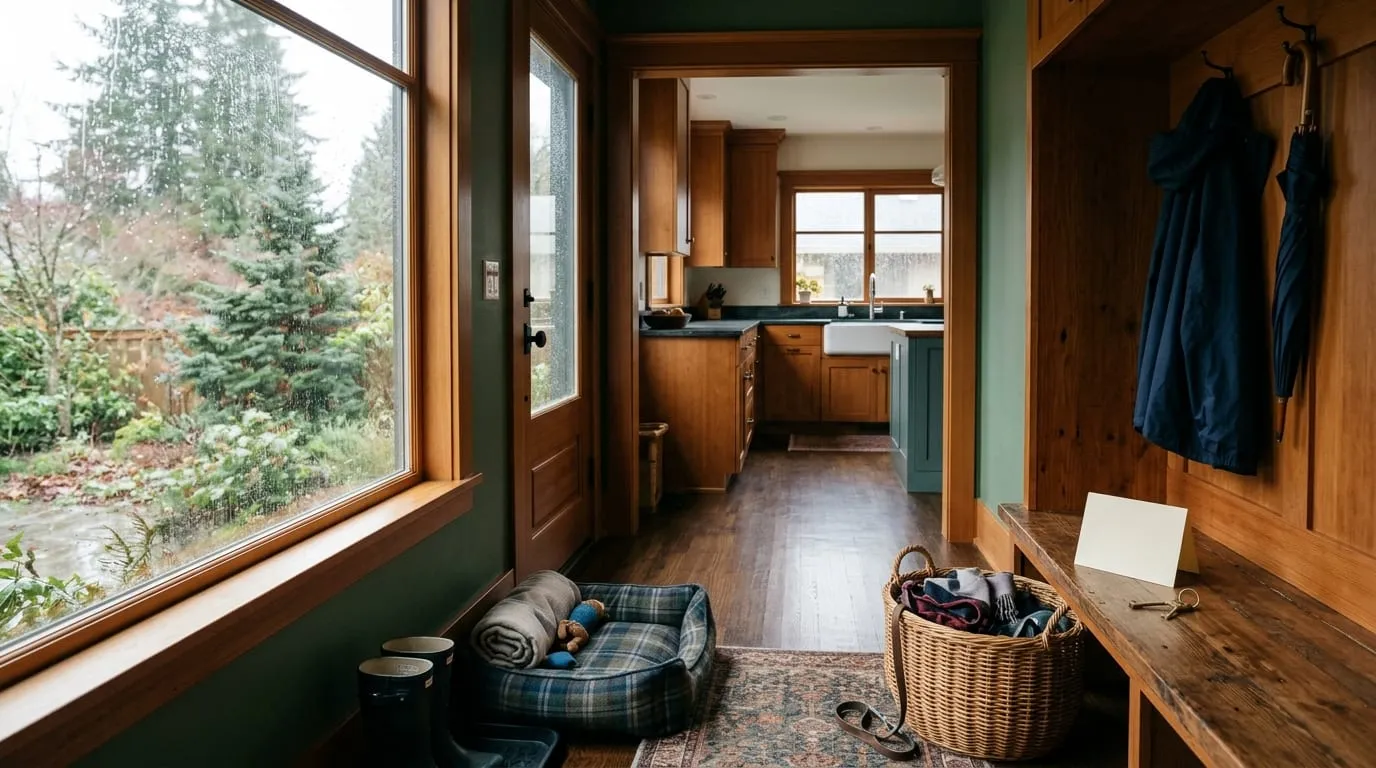
- Secure pets in one room the cleaner can skip, or in a crate, or take them out for the visit. Tell the service which room is closed and that it should stay closed.
- Say in writing if a pet may escape. Cleaners prop doors open to carry equipment. A note on the front door helps.
- Pick up pet bowls, toys, and litter areas so floors can be cleaned. Ask whether litter boxes are in scope; many services do not empty them.
- Mention shedding. Heavy shedding adds time to vacuuming, especially on upholstery and stairs. Our guide to cleaning floors in a wet climate covers keeping muddy paws and grit under control between visits.
- Product sensitivities. If a pet has allergies, or you would rather certain products not be used on floors the animal lies on, say so. See the product section below.
Valuables, fragile items, and things to leave alone
Put away anything you would be upset to lose or find moved. This protects everyone, including the cleaner.
- Put away: cash, jewelry, watches, prescription medication, passports and documents, checkbooks, small electronics, and keys to other properties.
- Flag fragile items: heirloom glass, art, collections, antique furniture, and anything on a high shelf that should not be dusted. Either put them away or list them as “do not touch.”
- Special surfaces: natural stone, unsealed wood, lacquered furniture, specialty appliances, and painted walls that mark easily. Tell the service what they are and how you care for them. Our guide to cleaning painted walls and trim explains why some walls should only be wiped gently.
- Rooms to skip: a home office with papers spread out, a child’s room mid-nap, a room you are renovating.
If you have an indoor camera, tell the service. It is courteous, and it avoids an awkward surprise.
Special instructions and product preferences
Write down what matters, in order. A short list is far more useful than a long one, because a cleaner can actually follow it.
What a good instruction sheet includes
- Your top three priorities for this visit, for example “kitchen floor, primary shower glass, dust the bookshelves.”
- Things to avoid, such as a product, a surface, or a room.
- How the home works: which light switch runs the fan, where the vacuum outlet is, which toilet runs.
- Where supplies are, if the service uses yours.
- How to reach you during the visit if a question comes up.
Products
Many services bring their own supplies. If you have sensitivities, allergies, asthma in the household, or a preference for fragrance-free products, say so before the first visit, not at the door. If you want specific products used, leave them out and labeled. The EPA’s Safer Choice program certifies cleaning products that meet its criteria for safer ingredients, which gives you a concrete standard to ask about. For background on what different products do, see cleaners, sanitizers, and disinfectants explained.
Never ask a cleaner to combine products, and do not leave out bottles that should not be used together. If you are unsure whether a product is safe on a surface, say “leave it” rather than guess.
The before-the-visit checklist
Use this the evening before or the morning of the visit. Most of it takes 20 to 40 minutes once you have done it once.
A few days before
- Entry method decided and shared (key, lockbox, code, or you will be home)
- Building access explained (lobby, fob, elevator, concierge)
- Parking options described, including any permit you will leave out
- Product preferences and sensitivities sent to the service
- Confirmed what is and is not included (dishes, laundry, litter boxes, inside appliances)
The evening before or that morning
- Floors clear of shoes, toys, cords, and laundry
- Counters and tables cleared of loose items and papers
- Dishes done or loaded, if dishes are not in scope
- Cash, jewelry, medication, and documents put away
- Fragile and irreplaceable items put away or listed as “do not touch”
- Pets secured, and a note on the door if one may slip out
- Alarm disarmed or service code ready
- Priority list left somewhere obvious, such as the kitchen counter
- Your phone on, in case of questions
What to expect on the first visit
The first visit is usually the longest. A home that has not had a professional clean takes more time, and the cleaner is learning the layout, your priorities, and where things are.
- Arrival and walkthrough. If you are home, spend 10 to 15 minutes walking through. Point out priorities, problem areas, and anything to avoid. Then let them work.
- Who is coming. A well-run service tells you in advance who will arrive. Sweepless in Seattle, which publishes this guide, sends a text the evening before with the name of who is coming; whichever service you use, ask how it lets you know.
- What gets done. Expect the scope you agreed to, not everything in the house. If you want inside the oven or fridge, interior windows, or baseboards by hand, confirm those are included.
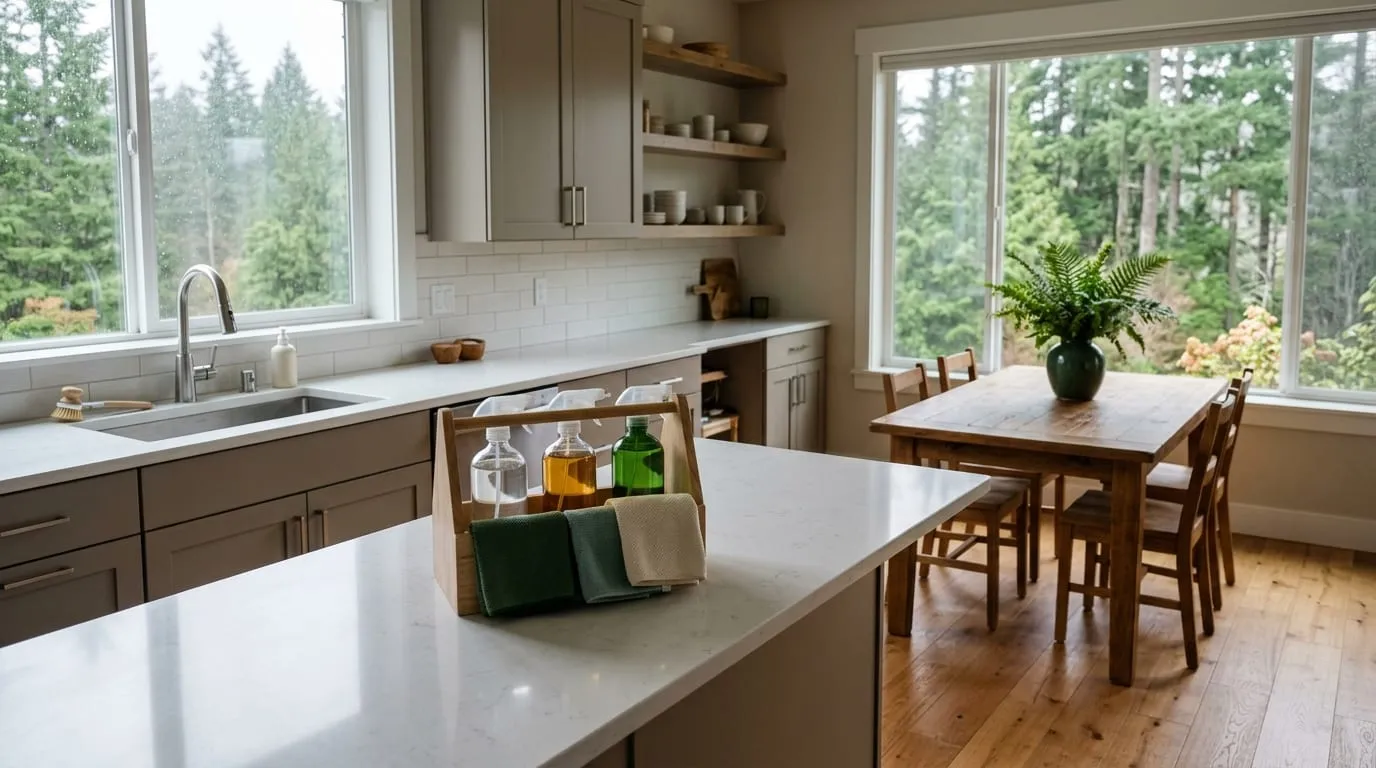
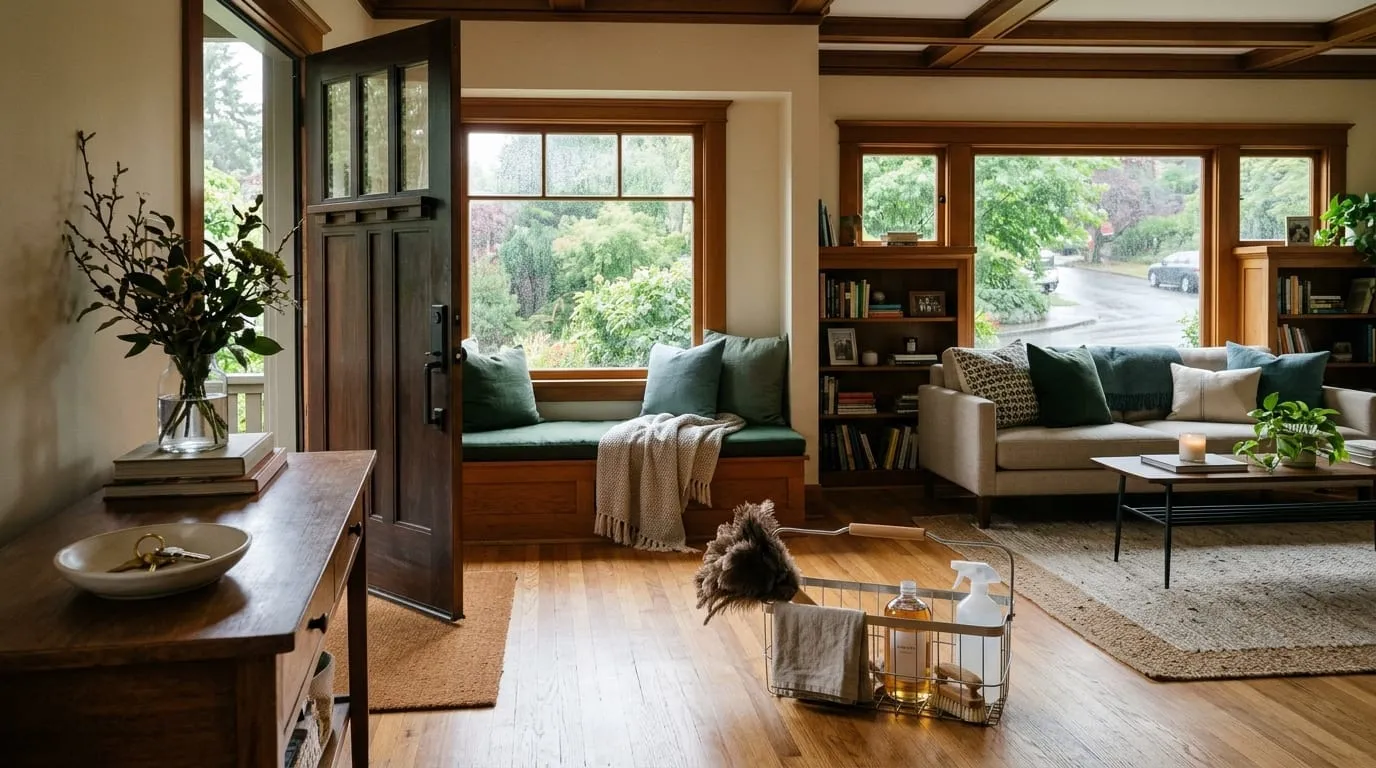
- Supplies. If the service brings its own, you will see it set up a caddy and equipment near the entry.
- Time. If a first visit runs long, or something could not be done, a good cleaner will tell you why.
Worked example: preparing a two-bedroom for a first visit (illustrative)
This is an illustrative scenario, not a real client. Consider a two-bedroom, one-bath apartment in Fremont with a dog, booked for a weekday morning while the residents are at work.
Three days before: The residents tell the service the building has a call box, and that the front desk is unstaffed. They decide to leave a key in a lockbox on the bike rack inside the garage gate and send the gate code. They note there is no guest parking, the street is in an RPZ, and they will leave their one-day short-term permit on the kitchen counter, with a note on where to find it. They mention one person has a fragrance sensitivity.
The evening before: They walk through with two baskets, collect shoes, chargers, and mail, and put the baskets in the bedroom closet. They run the dishwasher. The second bedroom, used as an office, stays closed with a note: “skip, please.”
That morning: The dog goes to daycare. Medication and a laptop go into a drawer. A note on the counter lists three priorities: bathroom tub and grout, kitchen floor under the table, and the dog hair on the couch. A second line reads: “No scented sprays, please.”
After the visit: The residents notice the area behind the toilet was missed. They send a photo the same evening, within the service’s reporting window, and ask for it to be added to the standing notes.
Total prep: roughly 40 minutes spread over three days, most of it decisions that only have to be made once.
Communicating feedback after the visit
Feedback is how a cleaning service learns your home. Most problems are easy to fix early and harder to fix once a routine sets in.
- Look the same day. Walk through within a few hours. Check the priorities you listed first.
- Report within the guarantee window. Many services set a deadline for reporting a miss. Sweepless in Seattle, which publishes this guide, uses a 24-hour window for its re-clean guarantee; other services use different windows, so check yours.
- Be specific and send a photo. “The shower glass still has spots on the lower half” is fixable. “Bathroom was not great” is not.
- Say what went well, too. It tells the service what to keep doing, especially if a different person comes next time.
- Turn feedback into standing notes. Ask the service to add recurring preferences to your file so they survive staff changes.
If the same issue repeats after you have reported it twice, it is fair to ask whether the scope, the time allowed, or the fit is the real problem. Our guide to professional cleaning vs. DIY can help you decide whether a different arrangement makes more sense.
What not to bother with
- Pre-cleaning bathrooms or kitchens. That is the job you hired out.
- Vacuuming first. Pick up the floor; leave the vacuuming.
- Buying special supplies, unless you have specific product preferences or the service asks you to.
- Hiding normal mess. A cleaner has seen it before. The only things to hide are valuables and private items.
Moving out instead?
Preparing for a move-out clean is a different job: the home should be empty, and the standard is the landlord’s checklist rather than your own preferences. Our sister publication covers that in its Seattle move-out checklist.
When you are ready to book, ask any service for a written quote against your priorities. For one local option, Sweepless in Seattle, which publishes this guide, takes quote requests online.
Common questions
Should I be home when the cleaner comes?
For the first visit, it helps to be there for the first 10 to 15 minutes to walk through priorities and then leave them to work. After that, most people are not home. Either is fine as long as access, pets, and instructions are settled in advance.
Do I need to do the dishes before a cleaner arrives?
Ask your service. Some include loading the dishwasher or washing a few items, and many do not treat a full sink as part of a standard clean. If dishes are not in the scope, a sink piled with them means the sink and nearby counter cannot be cleaned properly.
Is it rude to leave a list of instructions?
No. A short written list is the most useful thing you can give a cleaner, because it survives staff changes and does not rely on anyone's memory. Keep it to priorities, things to avoid, and anything unusual about the home.
Should I tip a house cleaner?
Practices vary and there is no fixed rule. Some people tip per visit, some at the holidays, and some not at all with a company that sets its own pay. If you are unsure, ask the service what its cleaners receive and whether tips go directly to them.
What if something gets broken?
Tell the service promptly, with a photo, and ask how its insurance handles damage. This is one reason to confirm liability coverage before you book, and to put away anything irreplaceable beforehand.
Sources and references
- RPZs: Types of Permits and Fees , Seattle Department of Transportation Primary source Accessed November 15, 2026
- Parking Regulations , Seattle Department of Transportation Primary source Accessed November 15, 2026
- Safer Choice , U.S. Environmental Protection Agency Primary source Accessed November 15, 2026
- Sweepless in Seattle: Home and Airbnb Cleaning in Seattle, WA , Sweepless in Seattle Accessed November 15, 2026
See something out of date or wrong? Tell the editors. Read how we work in our editorial policy.