How to Clean a Bathroom Exhaust Fan (and Why It Matters in Winter)
Test your bathroom fan with a tissue, shut off power at the breaker, wash the grille, vacuum the housing, and run it 20 minutes after showers, as HVI recommends.
The short answer
Turn the power off at the breaker, take down the grille and wash it in warm water with dish soap, then unplug the motor if your model allows and gently vacuum the blades, motor, and housing without getting electrical parts wet. Clean it every few months, check it with a tissue test, and run it during showers and for 20 minutes afterward, which is what the Home Ventilating Institute recommends.
- A quick check: hold a single square of toilet paper near the running fan with the door slightly open. If the fan cannot hold it against the grille, it is moving very little air.
- Always switch the power off at the service panel before cleaning. Broan-NuTone's instructions for its common ceiling fans say to switch power off at the panel and lock or tag it before servicing or cleaning.
- Wash only the plastic grille. Vacuum the blades, motor, and housing; the manufacturer warns that metal and electrical parts should never be immersed in water.
- The Home Ventilating Institute recommends leaving the fan on for 20 minutes after using the bathroom; a timer switch makes that automatic.
- Water dripping from the fan, a fan that hums but barely pulls, grinding bearings, or a duct that ends in the attic are jobs for an electrician or HVAC contractor, not a cleaner.
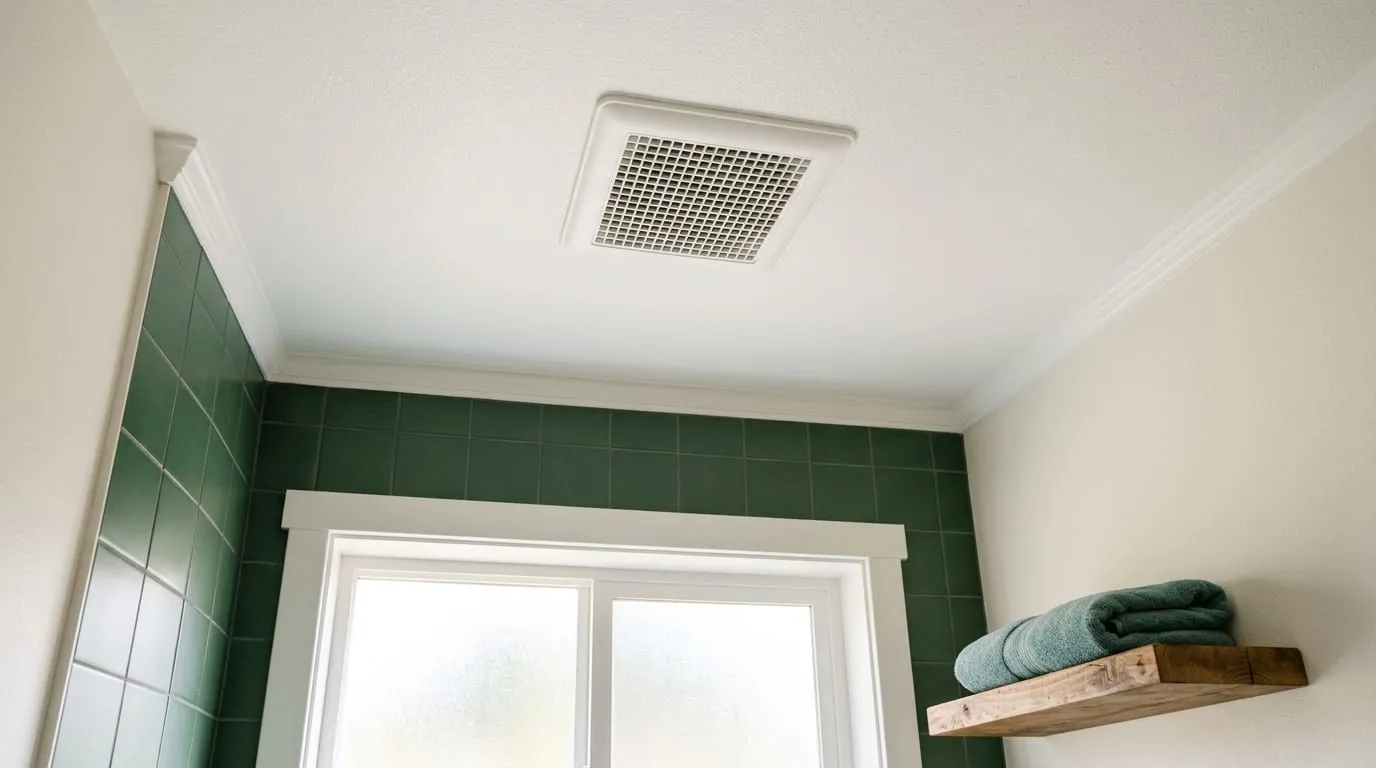
A bathroom exhaust fan is the main thing standing between a hot shower and mildew on your ceiling, grout, and window sill. Cleaning one takes about 20 minutes: turn the power off at the breaker, take down the grille and wash it, vacuum the blades and housing, and put it back. Then test it with a single square of tissue and run it longer than you probably do now. The Home Ventilating Institute (HVI) recommends 20 minutes after using the bathroom. This guide walks through each step, what never to do, and the signs that the fan or its duct needs an electrician or HVAC contractor rather than a cleaning.
Why the fan matters most in a Seattle winter
From November through March, Seattle bathrooms work hard. Windows stay closed, outdoor air is damp, and every shower puts a cloud of warm water vapor into a small room. If the fan does not move that moisture outside, it settles on the coldest surfaces it can find: the mirror, the window, the ceiling corners, and the grout.
The EPA’s mold guidance puts bathroom ventilation near the top of its list. It advises running the bathroom fan or opening the window when showering, and it notes that if mold keeps coming back in a bathroom, increasing ventilation and cleaning more often will usually prevent it from recurring, or at least keep it to a minimum. The Washington State Department of Health likewise tells homeowners to install and use exhaust fans in bathrooms, kitchens, and laundry rooms.
A fan only does that job if it actually moves air. The louvers on a bathroom fan grille catch lint, dust, and hairspray residue, and the blades inside collect a gray felt of the same. Both cut airflow, so a fan that hums along can be doing very little. Cleaning it is the cheapest ventilation upgrade there is.
Step 1: the tissue test
Do this before and after cleaning so you can see the difference.
- Close the window. Leave the bathroom door open an inch or two, or make sure there is a gap under it. HVI notes that bathroom doors need to be undercut so makeup air can enter; a fan cannot pull air out of a sealed room.
- Turn the fan on and wait a few seconds.
- Hold a single square of toilet paper flat against the grille, then let go.
| What happens | What it suggests | Next step |
|---|---|---|
| The tissue holds firmly against the grille | The fan is pulling air | Clean on schedule; keep using it |
| The tissue clings weakly, then drops | Reduced airflow | Clean the grille and blades, then retest |
| The tissue falls straight down | Little or no airflow | Clean, then retest; if no change, check the duct and outside vent, or call a pro |
| You hear the motor but feel nothing | Blocked duct, stuck damper, or disconnected duct | Call an electrician or HVAC contractor |
The tissue test is a rough check, not a measurement. It tells you whether the fan is moving air at all, not whether it meets its rated airflow.
Step 2: safety before you touch anything
Exhaust fans are hard-wired electrical appliances mounted overhead in a wet room. Take these precautions every time.
- Switch the power off at the breaker, not just the wall switch. Broan-NuTone’s installation guide for its common ceiling fans tells owners to switch power off at the service panel before servicing or cleaning, and to lock the panel or fasten a warning tag to it so nobody switches it back on.
- Confirm it is off. Flip the wall switch; the fan and any built-in light should stay dead.
- Use a stable step stool or ladder, set on a dry floor, not the edge of the tub.
- Wear eye protection. Dust and dead insects fall straight down when the grille comes off.
- Have your manual handy if you can. Search the model number on the label inside the housing; designs differ in how the grille and motor come out.
Step 3: remove and wash the grille
Most grilles are held up by two spring wire clips that pinch into slots in the housing.
- Pull the grille down gently, about an inch, until you can see the clips.
- Squeeze the wire clips together and slide them out of their slots. Some grilles use a center screw or a twist-off cover instead.
- If there is a light, unplug its connector from the housing receptacle before the grille comes fully free.
- Wash in the sink in warm water with a little dish soap. Broan-NuTone’s guide says to clean the grille with a mild detergent such as dishwashing liquid and dry it with a soft cloth, and not to use abrasive cloths, steel wool pads, or scouring powders.
- Use a soft brush or old toothbrush for the louvers. Do not put a grille with a built-in light or electronics in water; wipe it with a damp cloth instead.
- Dry completely before you put it back.
Step 4: vacuum the housing and blades
While the grille dries, deal with the inside.
- Unplug the motor from its receptacle in the housing, if your model has a plug-in motor cord. The Broan-NuTone guide describes unplugging the motor cord and removing the motor plate on its models; others are screwed in place and are best left where they are.
- Vacuum with a soft brush attachment. The same guide says to gently vacuum the fan, motor, and interior of the housing.
- Work the blades one at a time, turning the wheel by hand and brushing each blade. Do not bend them; a bent impeller wobbles and rattles.
- Wipe the plastic housing walls with a barely damp cloth if they are greasy or sticky, keeping water away from the motor and wiring.
- Look up the duct opening with a flashlight. You may see a flap (the backdraft damper). It should swing freely when you nudge it.
- Reassemble in reverse order, restore power at the breaker, and repeat the tissue test.
What not to do
- Do not spray cleaner into the housing or onto the motor.
- Do not soak or immerse the motor or other metal and electrical parts. The manufacturer’s guide says this plainly.
- Do not oil a sealed motor. Broan-NuTone states that its motor is permanently lubricated and never needs oiling.
- Do not use steel wool or scouring powder on the grille.
- Do not mix cleaning products to cut through greasy buildup. The Washington State Department of Health warns never to mix bleach with ammonia, acids, or other cleaners. Our guide to cleaners and what never to mix explains why.
- Do not cover the grille with plastic or a dryer sheet “filter.” It blocks the airflow you are trying to restore.
- Do not disconnect or redirect the duct yourself. HVI notes that exhausting directly into the attic is prohibited by building codes.
How long to run it after a shower
HVI’s bathroom ventilation guidance recommends leaving the fan on for 20 minutes after using the bathroom, and suggests a timer so the fan switches itself off at the right time. Practical ways to make that happen:
- A countdown timer switch that replaces the standard wall switch. Installing one is electrical work; hire an electrician if you are not qualified.
- A humidity-sensing fan or control that turns on and off with moisture levels.
- A habit: turn the fan on before the water starts and set a phone timer for 20 minutes when you step out.
Keep the door slightly open after the shower, and leave the shower curtain spread out so it dries. If you dry laundry in the bathroom, run the fan the whole time.
Is the fan the right size?
HVI recommends about 1 CFM (cubic feet per minute) of airflow per square foot for bathrooms up to 100 square feet. A 5 by 8 foot bathroom is 40 square feet, so it needs a fan rated at least 40 CFM. For larger bathrooms, HVI sizes by fixture: 50 CFM each for a toilet, shower, or bathtub, and 100 CFM for a jetted tub. If your fan is undersized, cleaning helps, but it will not make up the gap.
Signs the fan or duct needs a professional
A cleaner can wash a grille and vacuum a housing. The problems below involve wiring, ducts, the roof, or the attic, and belong to an electrician, an HVAC contractor, or, for renters, the landlord.
- Water drips from the fan. HVI says the most common cause is uninsulated duct running through a cold attic, where warm, humid air condenses inside it; the fix is replacing it with insulated duct. Wind-driven rain through a faulty roof or wall cap is the other likely cause.
- The duct ends in the attic instead of outside. HVI says building codes prohibit it.
- Grinding, squealing, or rumbling that cleaning does not fix. Broan-NuTone advises replacing a motor with noisy bearings with the exact service motor, and the impeller at the same time.
- The fan hums but does not spin, or the tissue test fails even after cleaning.
- A burning smell, scorching, or a tripping breaker. Turn it off at the breaker and call an electrician.
- Mold on the ceiling around the fan, or growth larger than about 10 square feet. The EPA says areas under about 10 square feet are usually a DIY cleanup; anything larger, or linked to water damage, needs more.
- The fan is very loud or very old. HVI’s FAQ notes that many current fans are much more efficient and quieter than older models. ENERGY STAR says its certified ventilation fans use about 48 percent less energy than standard models, with less noise. Loudness is rated in sones; HVI compares one sone to the sound of a quiet refrigerator.
Seasonal maintenance table
| When | Task | Time |
|---|---|---|
| Every shower | Fan on before the water, off 20 minutes after; door ajar | None |
| Monthly | Vacuum or dust the grille in place with a brush attachment | 2 minutes |
| October (before the wet season) | Full clean: power off, wash grille, vacuum housing and blades, tissue test | 20 to 30 minutes |
| January | Tissue test; check ceiling corners and grout for returning mildew | 5 minutes |
| April | Full clean again; check the outside vent cap is clear of nests and debris from the ground | 20 to 30 minutes |
| Any time | Dripping, grinding, burning smell, or failed test after cleaning: call a pro |
If your bathroom is still fogging and mildewing with a clean, working fan, see our rainy season home cleaning guide for humidity targets, meters, and dehumidifiers. The kitchen range hood has its own cleaning routine in our kitchen deep cleaning guide.
Worked example: a windowless bathroom in January (illustrative)
The following is an illustrative scenario, not a measurement or a real household.
Consider a two-bedroom condo with a windowless bathroom of about 40 square feet. Two people shower each morning. The mirror stays fogged for a long time, the grout at the top of the tub surround has started to show black specks, and the bedroom window next door sweats every morning.
- Test. With the door open a crack, the tissue clings to the grille for a second and drops.
- Check the size. The label inside the housing shows a 50 CFM fan, enough for 40 square feet under HVI’s 1 CFM per square foot guideline.
- Clean. Power off at the breaker. The grille louvers are packed with gray lint; it gets a soapy wash in the sink. The blade wheel has a thick felt of dust, which comes off with a brush attachment. Power back on.
- Retest. The tissue now holds against the grille.
- Change the habit. They start the fan before showering, leave it for 20 minutes afterward on a phone timer, and plan to have an electrician install a timer switch.
- Deal with the specks. They scrub the grout with detergent and water and dry it. Our guide to mildew on window sills covers the bedroom window.
In this scenario, a 20 minute cleaning restored the fan’s airflow and the new run time gives it a fair chance to clear the room. If the mirror still stayed fogged, the next step would be an HVAC contractor to check the duct, not more cleaning.
When to bring in help
Most fan maintenance is quick DIY work. If ladders are a problem for you, a house cleaner can wash the grille and vacuum the housing during a regular or deep clean, but ask first: some cleaning companies do not take down fixtures. Anything involving wiring, ducts, the roof cap, or the attic is for an electrician or HVAC contractor, and renters should report a weak or broken fan to the landlord.
Common questions
How often should I clean a bathroom exhaust fan?
A light dusting of the grille monthly and a full grille wash and housing vacuum every three to six months suits most homes. Clean sooner if you see a fuzzy gray layer on the louvers, the mirror stays fogged longer than it used to, or the tissue test gets weaker. Busy family bathrooms and homes with pets or lots of lint need it more often.
Can I spray cleaner into the fan housing?
No. Spraying liquid into the housing puts moisture on the motor and wiring. Wash the removable grille in the sink, and clean everything else with a vacuum brush and, at most, a barely damp cloth on the plastic housing walls with the power off. Broan-NuTone's guide warns that metal and electrical parts should never be immersed in water.
Should I oil a noisy bathroom fan motor?
Usually not. Many modern fan motors are sealed; Broan-NuTone's guide for its common ceiling fans says the motor is permanently lubricated and never needs oiling, and that noisy bearings mean replacing the motor, ideally with the impeller. Rattles, though, are often just a loose grille or dust on the blades, so clean and tighten first.
Is it okay to leave the bathroom fan running all night?
Check your fan's manual first. HVI notes that ventilation can also be provided continuously, but only the manual tells you whether your particular fan is designed to run all the time, and a fan that runs hot, smells, or is old should not run unattended for long periods. For most people a timer or humidity-sensing switch, set for at least 20 minutes after a shower, is the simpler fix.
Does a bigger fan clean the air faster?
Only if it is sized and ducted properly. HVI recommends about 1 CFM of airflow per square foot for bathrooms up to 100 square feet, so a 40 square foot bathroom needs at least a 40 CFM fan. A long, crushed, or uninsulated duct can cut real airflow well below the rating on the box.
Sources and references
- Bathroom Ventilation , Home Ventilating Institute Accessed November 15, 2026
- FAQs , Home Ventilating Institute Accessed November 15, 2026
- Installation Guide, Ceiling/Wall Fans Models 670, 671, 688, 689 , Broan-NuTone Accessed November 15, 2026
- A Brief Guide to Mold, Moisture and Your Home , U.S. Environmental Protection Agency Primary source Accessed November 15, 2026
- Mold Cleanup in Your Home , U.S. Environmental Protection Agency Primary source Accessed November 15, 2026
- Mold , Washington State Department of Health Primary source Accessed November 15, 2026
- Ventilation Fans , ENERGY STAR (U.S. EPA and Department of Energy) Primary source Accessed November 15, 2026
See something out of date or wrong? Tell the editors. Read how we work in our editorial policy.