A Spring Deep-Cleaning Plan for Pacific Northwest Homes
A four-weekend spring deep-cleaning plan for Seattle homes: windows and screens, entry grit, mildew checks, closet swaps, decluttering, and what to hire out.

The short answer
Treat spring as the reset after the wet season and split it into four weekends: declutter and swap closets first, then windows, screens, and top-down dusting, then kitchen and bathrooms with a mildew check, then bedrooms, floors, and the entry. Start once the rain eases (NOAA normals for Sea-Tac fall from 4.17 inches in March to 1.88 in May) and hire out only the jobs that need ladders, equipment, or remediation.
- NOAA's 1991-2020 normals for Sea-Tac show precipitation dropping from a November peak of 6.31 inches to 3.18 in April, 1.88 in May, and 1.45 in June, which makes late spring a natural time to open up the house.
- Declutter first. Every item you remove is one you do not have to dust, wash, or store, and it frees closet space for the seasonal swap.
- Windows and sills hold the winter's condensation grime; in homes built before 1978, the EPA advises wet wiping sills and never dry sweeping or sanding flaking paint.
- Check the usual mildew spots (window tracks, exterior-wall closets, behind furniture, under sinks, bathroom ceilings) and clean small patches; the EPA says areas under about 10 square feet are usually a DIY job.
- Open windows on low-pollen days: AAFA advises keeping them closed in high pollen seasons, and the EPA suggests checking pollen and air quality before ventilating.
Spring in the Pacific Northwest is less about winter dirt than winter damp. After months of closed windows, tracked-in grit, and condensation, the house needs a reset: clear out what you no longer use, clean the glass and sills that ran wet all winter, check the usual mildew spots, swap closets for the warm months, and take care of the entry that absorbed the mud. This plan splits that into four weekends, room by room, so you can follow it any spring without losing a whole week to it.
If you want the year-round view of which deep-cleaning tasks belong on which schedule, start with how often to deep clean. This article is the seasonal version: what to do once, in spring, and in what order.
Why spring is the reset after the wet season
Seattle’s rain is front-loaded into late fall and winter. NOAA’s 1991-2020 climate normals for Seattle-Tacoma International Airport show it clearly:
| Month | Normal precipitation (inches) | What it means for spring cleaning |
|---|---|---|
| November | 6.31 | Wettest month; the season’s moisture starts building |
| January | 5.78 | Peak condensation season indoors |
| March | 4.17 | Still wet; good for indoor work and decluttering |
| April | 3.18 | Tapering; inside rooms and closets |
| May | 1.88 | Drier; windows, screens, and airing out |
| June | 1.45 | Reliable window weather for most years |
Three things happen as the rain eases. You can open windows long enough to dry the house out. Outdoor jobs like washing screens become practical. And the problems the wet season created, from black grime in window tracks to musty closets, are finally visible and fixable at the source rather than just wiped. Our guide to keeping your home clean during the rainy season covers the daily habits from October to April; spring is when you undo what those months left behind.
One caution: spring is also a high pollen season. AAFA advises keeping windows and doors closed when pollen is high, and the EPA suggests avoiding ventilation with outdoor air when pollen or pollution is high and checking local conditions first. Air the house on low-count days, and if someone at home has allergies, keep the bedroom windows shut.
Before you start: the kit and the rules
Gather supplies before weekend one so you are not stopping mid-room:
- Microfiber cloths (a stack, not three), a bucket, a squeegee, and a soft brush.
- A vacuum with crevice and upholstery tools.
- Mild dish detergent and whatever single-purpose cleaners you already use.
- Gloves, a step stool, and boxes or bags labeled keep, donate, recycle, and dispose.
- A humidity meter if you do not already have one.
Two rules apply all month. First, never mix cleaning products, and follow the label for dwell times. Second, if your home was built before 1978, the EPA says it is more likely to have lead-based paint, and that worn paint on friction surfaces such as window sills and doors can produce hazardous dust. In those homes, wet wipe sills and frames, do not dry sweep, and do not sand or scrape flaking paint. The EPA advises using a HEPA vacuum where there is visible dust or chips from flaking paint.
The four-weekend plan
Each weekend is about one full day of work for a typical two-bedroom home, split across Saturday and Sunday so drying time and drop-offs fit in. These estimates are editorial, not measured; a larger or more cluttered home takes longer.
| Weekend | Focus | Rooms and tasks | Done when |
|---|---|---|---|
| 1 | Declutter and swap | Every closet, drawers, entry storage, under the bed; sort keep, donate, recycle, dispose; store winter gear clean and dry | Bags are out of the house and closets have breathing room |
| 2 | Windows and top-down dust | Inside glass, sills, tracks, screens; curtains and blinds; ceiling fans, light fixtures, vents, tops of cabinets and door frames | No dust above shoulder height; tracks are clean and dry |
| 3 | Kitchen, bathrooms, and the mildew check | Fridge interior, range hood filter, cabinet fronts; grout, caulk, exhaust fans; mildew walk-through of the whole house | Fans pull air, caulk is sound, small mildew spots are gone |
| 4 | Bedrooms, floors, and the entry | Mattresses, bedding, under-bed vacuuming; baseboards; deep vacuum or mop every floor; entry mats, boot trays, and the floor by the door | Floors are clean edge to edge and the entry is set up for summer |
The order matters. Decluttering first means fewer things to clean around. Dusting high surfaces in weekend two means anything that falls lands on floors you have not done yet. Floors go last.
Weekend 1: declutter and the seasonal closet swap
Decluttering, room by room
Work one room at a time, and empty each closet or drawer completely rather than sorting in place. Wipe the empty shelf or drawer with a damp cloth before anything goes back. Four piles:
- Keep. It goes back only if it has a place.
- Donate. Clean, dry, usable items.
- Recycle or textile recycling. Worn-out clothes and linens.
- Dispose. Broken items, and anything hazardous kept separate.
Get donations out of the house the same weekend, or they quietly move back in.
Where it all goes
A few Seattle-specific pointers from Seattle Public Utilities:
- Do not donate damp or mildewed items. SPU’s donation guidance says not to give items that are wet, mildewed, or soiled with hazardous materials. Wash and dry anything musty first, or discard it.
- Worn textiles have a home too. SPU says its Threadcycle partners accept clothes, shoes, and linens even when torn or badly worn, and that fabrics should not go in your recycling bin.
- Old cleaners, paints, and solvents are household hazardous waste. SPU says Seattle’s two household hazardous waste facilities are free for King County residents, need no appointment, and are separate from the transfer stations, which do not accept it. Keep products in their original containers and never consolidate them.
For bulky items, transfer station details, and a full list of donation options, our sister site’s disposal and donation guide for a Seattle move covers the logistics in depth, and it applies just as well to a spring purge as to a move.
The closet swap
- Wash before storing. Winter coats, sweaters, and rain gear go into storage clean and fully dry, following care labels. Anything stored even slightly damp can come out musty in the fall.
- Store off the floor and off exterior walls. Exterior-wall closets are among the spots the mildew check below flags; leave a gap behind stored bins and do not pack shelves solid.
- Breathable over airtight for fabrics you will not check all summer, unless you are certain everything is bone dry.
- Bring summer items out and air them for a day before they go on hangers.
Weekend 2: windows, screens, and top-down dusting
Inside glass, sills, and tracks
Window tracks are where the winter shows most: condensation runs down the glass, mixes with dust, and leaves black grime in the channel.
- Vacuum the track dry first with the crevice tool, so you are not turning dust into mud.
- Wet wipe the sill and track with warm water and a little detergent, working grime out of corners with an old toothbrush or a cloth over a flat tool.
- Clean the glass top to bottom with a squeegee or microfiber, then dry the sill and track completely.
- Look for mildew and soft wood as you go. Black spots that wipe off are a cleaning job; wood that is soft or paint that is failing needs repair. Our guide to preventing and removing mildew on window sills goes into both.
In pre-1978 homes, remember the EPA guidance above: wet methods only on sills, no scraping, and clean up chips with a damp paper towel.
Screens
Screens catch a winter of grime and a spring of pollen.
- Lift screens out and label where each one goes; a strip of painter’s tape on the frame works.
- Vacuum both sides with a soft brush attachment.
- Outside, lay each screen flat on a tarp or clean lawn, wash gently with a soft brush and mild soapy water, and rinse with a low-pressure hose. High pressure stretches the mesh or pops the spline.
- Let screens dry fully, ideally in the sun on a dry day, before reinstalling them.
Top-down dusting
Work from the ceiling down: ceiling fan blades, light fixtures, the tops of door frames and cabinets, vents and return grilles, then shelves and picture frames. Use a damp cloth rather than a dry duster so dust is captured rather than moved. Wash or vacuum curtains and wipe blinds while the windows are open, on a low-pollen day.
Weekend 3: kitchen, bathrooms, and the mildew check
Kitchen and bathrooms
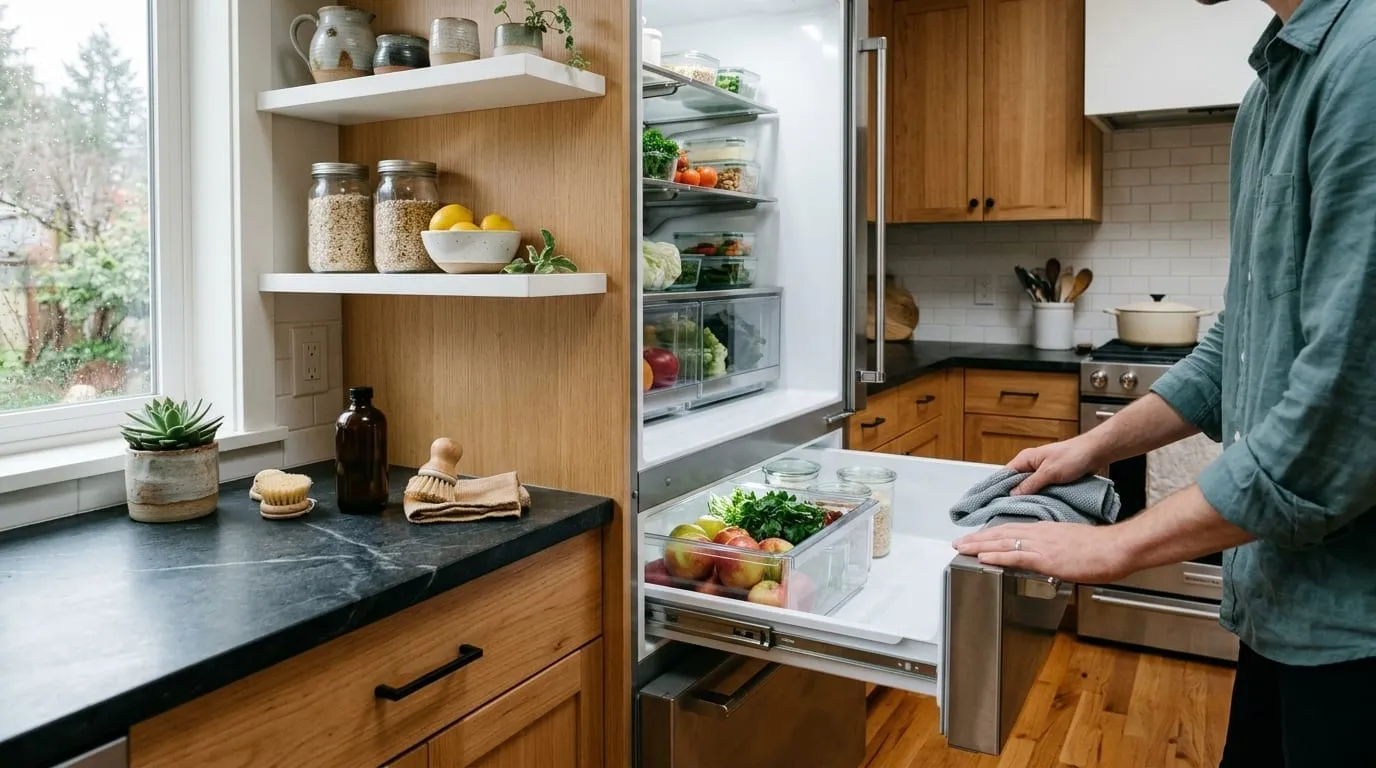
Give each room a deep clean rather than the usual surface pass: inside the fridge, the range hood filter, cabinet fronts, grout, and the shower. Our step-by-step kitchen deep cleaning guide covers the kitchen in full. In bathrooms, focus on what a wet winter stresses: caulk lines, grout, the ceiling above the shower, and the exhaust fan. A fan that barely moves a square of tissue held to the grille needs cleaning or repair.
The whole-house mildew walk-through
Walk every room with a flashlight and check these points:
- Window tracks, sills, and the bottom corners of frames
- Closets on exterior walls, especially the back wall and floor
- Behind beds, dressers, and sofas that sit against exterior walls
- Under the kitchen and bathroom sinks, including the cabinet floor
- Bathroom ceilings, caulk lines, and the shower curtain or door track
- Around the washer and the laundry area
- Basement corners, the foundation wall behind storage, and under stairs
- Entry closets where wet coats hung all winter
The EPA says that if a moldy area is less than about 10 square feet, roughly a 3 foot by 3 foot patch, you can in most cases handle it yourself: scrub hard surfaces with detergent and water and dry them completely, wearing gloves. Larger areas, significant water damage, or mold that keeps returning need more than cleaning. The EPA’s broader point is that moisture control is the key to mold control, so note where you found growth and fix the source: improve ventilation, pull furniture a few inches off exterior walls, and dry any leak within 24 to 48 hours. The EPA also lists cleaning and repairing gutters regularly among its moisture-control steps, which makes spring a good time to have them checked.
Weekend 4: bedrooms, floors, and the entry
Bedrooms
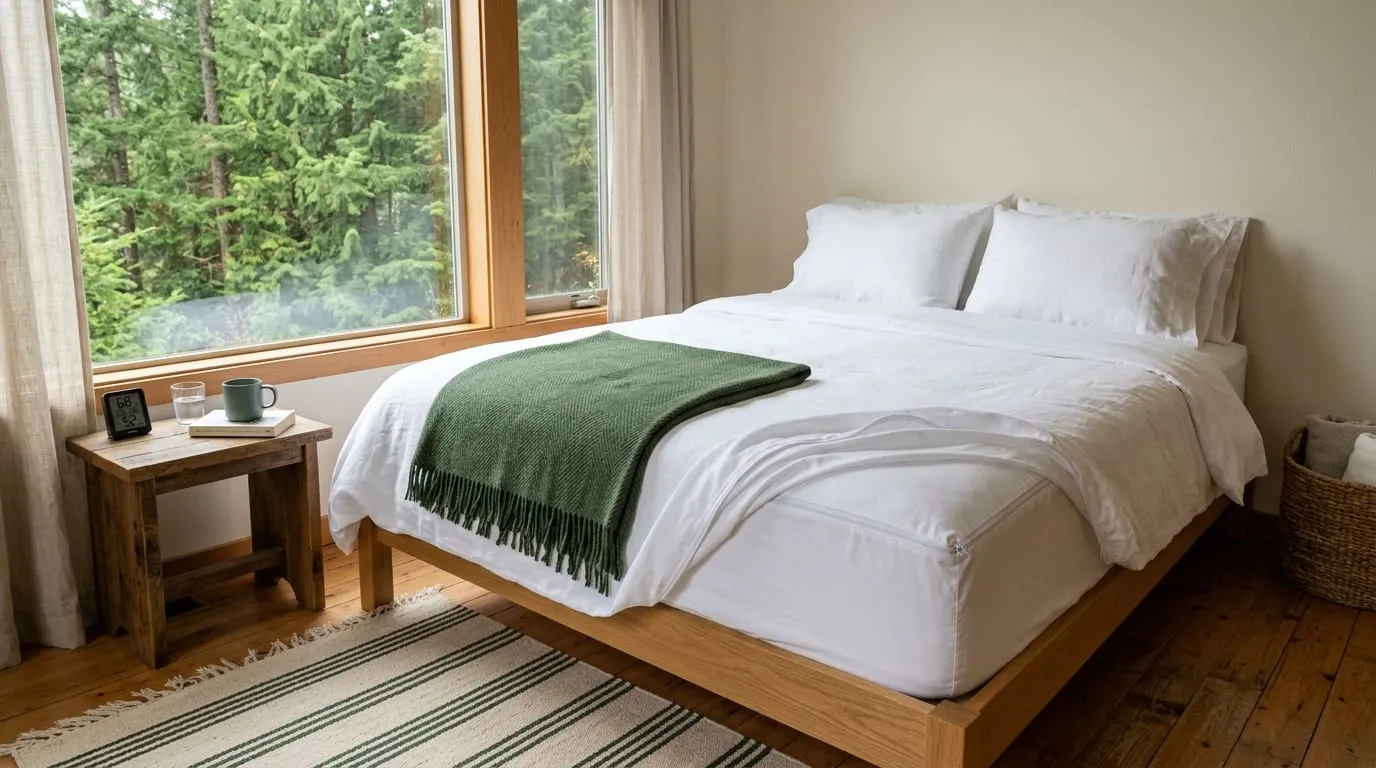
Strip and wash all bedding, vacuum the mattress and under the bed, and rotate or flip the mattress if its maker recommends it. If anyone has allergies, our guide to dust mites, mattresses, and bedding covers encasements and hot-wash temperatures.
Floors, edge to edge
Move light furniture and clean underneath, wipe baseboards, then vacuum or damp-mop every floor, working toward the door. The Carpet and Rug Institute recommends professional carpet deep cleaning every 12 to 18 months; if you are due, schedule it after this weekend so the carpet stays clean.
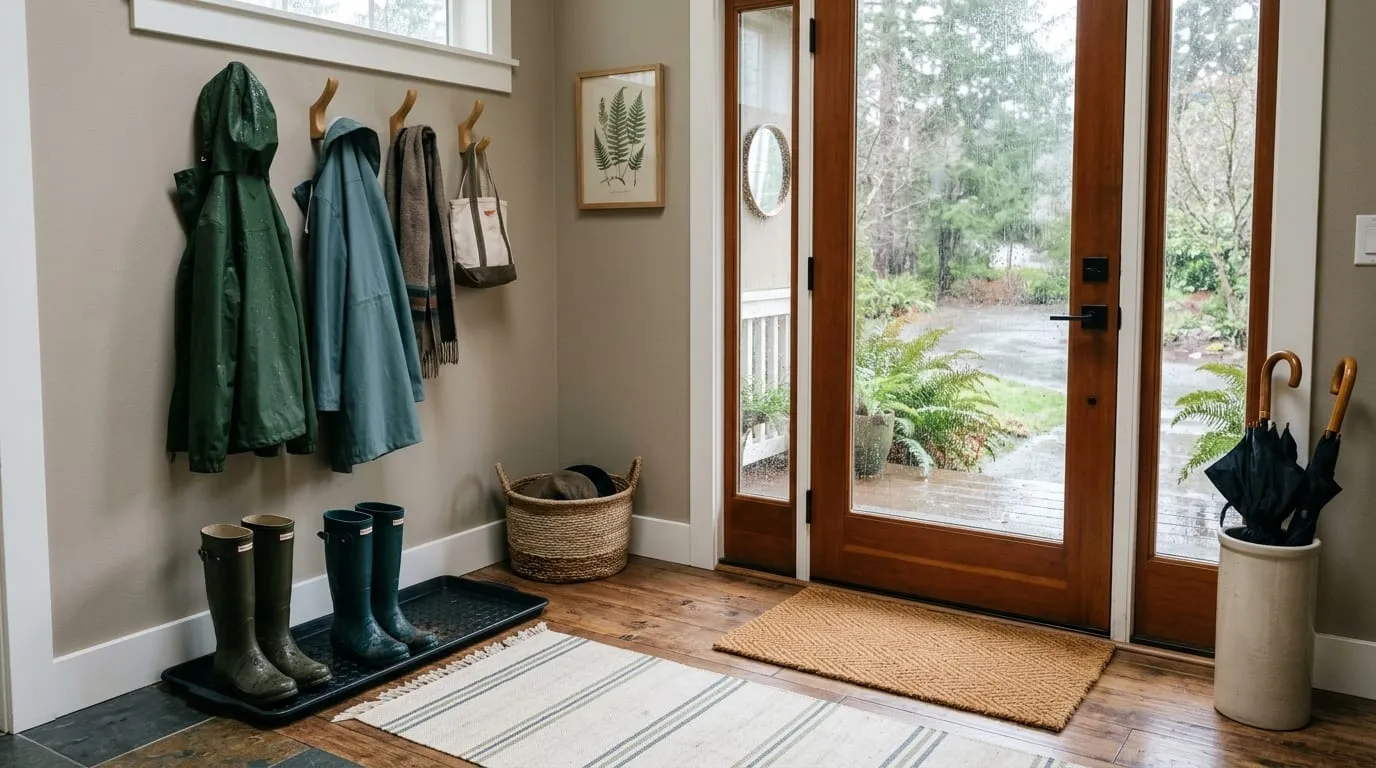
Entryways and grit
The entry took the worst of mud season.
- Wash the indoor mat per its label and dry it fully; replace one that smells musty or has a crumbling backing.
- Hose off the outdoor scraper mat and let it dry in the sun.
- Deep clean the entry floor and grout where boots dripped, since grit trapped there scratches finishes all summer.
- Empty and wash boot trays and umbrella stands.
- Downsize the entry for summer: store rain boots and heavy coats (clean and dry), and keep one mat system in place, because grit does not stop in June.
Worked example: one household’s spring (illustrative)
The following scenario is illustrative, not measured.
Consider a two-bedroom 1950s house in Seattle with two adults, a dog, carpeted bedrooms, wood floors elsewhere, and a laundry area in the basement.
- Weekend 1 (late March). They empty both bedroom closets and the hall closet, fill three bags of donations and one of worn textiles, and find two half-empty cans of solvent and an old drain cleaner, which go in a box for the household hazardous waste facility. Winter coats are washed and stored in bins on a shelf, not against the exterior wall.
- Weekend 2 (mid-May, a dry forecast). Screens come out and get washed on the lawn. Because the house predates 1978 and the sills show some chipped paint, they wet wipe the sills, pick up chips with damp paper towels, and add “repaint sills lead-safely” to their repair list instead of sanding.
- Weekend 3. The mildew walk-through finds a few small spots behind the bed on the exterior wall and in the basement corner behind storage boxes. Both are scrubbed and dried, the bed moves a few inches off the wall, and the boxes go onto a shelf. The bath fan fails the tissue test and gets cleaned.
- Weekend 4. Floors, bedding, and the entry. The dog’s entry mat is replaced, and they book professional carpet cleaning for the bedrooms, last done about 16 months ago.
The result is not a spotless house forever; it is a house that starts summer dry, uncluttered, and with its problem spots identified rather than hidden.
What to hire out, if anything
Most of this plan is well within DIY range. A few jobs are worth handing off:
- Exterior and upper-story windows, which need ladders and the right equipment.
- Professional carpet extraction on the CRI’s 12 to 18 month cycle.
- Gutter cleaning and repair, especially on two-story homes.
- Mold beyond about 10 square feet, or tied to a leak, which the EPA treats as more than a cleaning job. Renters should report leaks and recurring mold to the landlord in writing.
- Lead-safe paint repair on pre-1978 sills and trim, which the EPA steers toward certified renovators.
- A full deep clean if the four weekends are not realistic this year.
If the last one is you, Sweepless in Seattle, which publishes this guide, offers deep cleaning in Seattle and on the Eastside. Whoever you hire, ask what is included and how problems are handled before you book.
Common questions
When should I start spring cleaning in Seattle?
Any time from March onward works for the indoor weekends, but the window and screen weekend goes best in a dry stretch, which NOAA's normals suggest is more likely in May or June than March. Many households declutter in March, do the inside rooms in April, and save windows for the first reliably dry weekend.
Can I do the whole plan in one weekend instead?
You can compress it, but expect to drop tasks. The four-weekend split keeps each session to about a day of work and leaves room for drying time, donation drop-offs, and the weather. If you only have one weekend, prioritize decluttering, windows and sills, and the mildew check.
Is it safe to open all the windows to air the house out?
Usually, but check conditions first. Spring is a high pollen season, and AAFA advises people with pollen allergies to keep windows closed when counts are high, while the EPA suggests avoiding outdoor-air ventilation when pollen or pollution is high. On a low-count day, a few hours of cross-ventilation helps dry out a closed-up house.
What should I do with old cleaning products I find while decluttering?
Keep them in their original containers and do not combine them. Seattle Public Utilities says the city's two household hazardous waste facilities are free for King County residents and need no appointment, and that the transfer stations do not accept household hazardous waste.
Sources and references
- Monthly Climate Normals 1991-2020, Seattle-Tacoma International Airport (USW00024233) , NOAA National Centers for Environmental Information Primary source Accessed November 15, 2026
- A Brief Guide to Mold, Moisture and Your Home , U.S. Environmental Protection Agency Primary source Accessed November 15, 2026
- Mold Cleanup in Your Home , U.S. Environmental Protection Agency Primary source Accessed November 15, 2026
- Reduce the Risk of Lead Exposure at Home , U.S. Environmental Protection Agency Primary source Accessed November 15, 2026
- Biological Pollutants' Impact on Indoor Air Quality , U.S. Environmental Protection Agency Primary source Accessed November 15, 2026
- Asthma Triggers: Gain Control , U.S. Environmental Protection Agency Primary source Accessed November 15, 2026
- Control Indoor Allergens to Improve Indoor Air Quality , Asthma and Allergy Foundation of America Accessed November 15, 2026
- Cleaning and Maintenance (Carpet for Homes) , The Carpet and Rug Institute Accessed November 15, 2026
- Where to Dispose of Household Hazardous Waste , Seattle Public Utilities Primary source Accessed November 15, 2026
- Donate, Share, Resell, and Buy Used , Seattle Public Utilities Primary source Accessed November 15, 2026
See something out of date or wrong? Tell the editors. Read how we work in our editorial policy.