The Ultimate Apartment Cleaning Checklist
Daily, weekly, monthly, and seasonal apartment cleaning checklists for renters and condo owners, with small-space tactics and a studio vs. two-bedroom plan.
The short answer
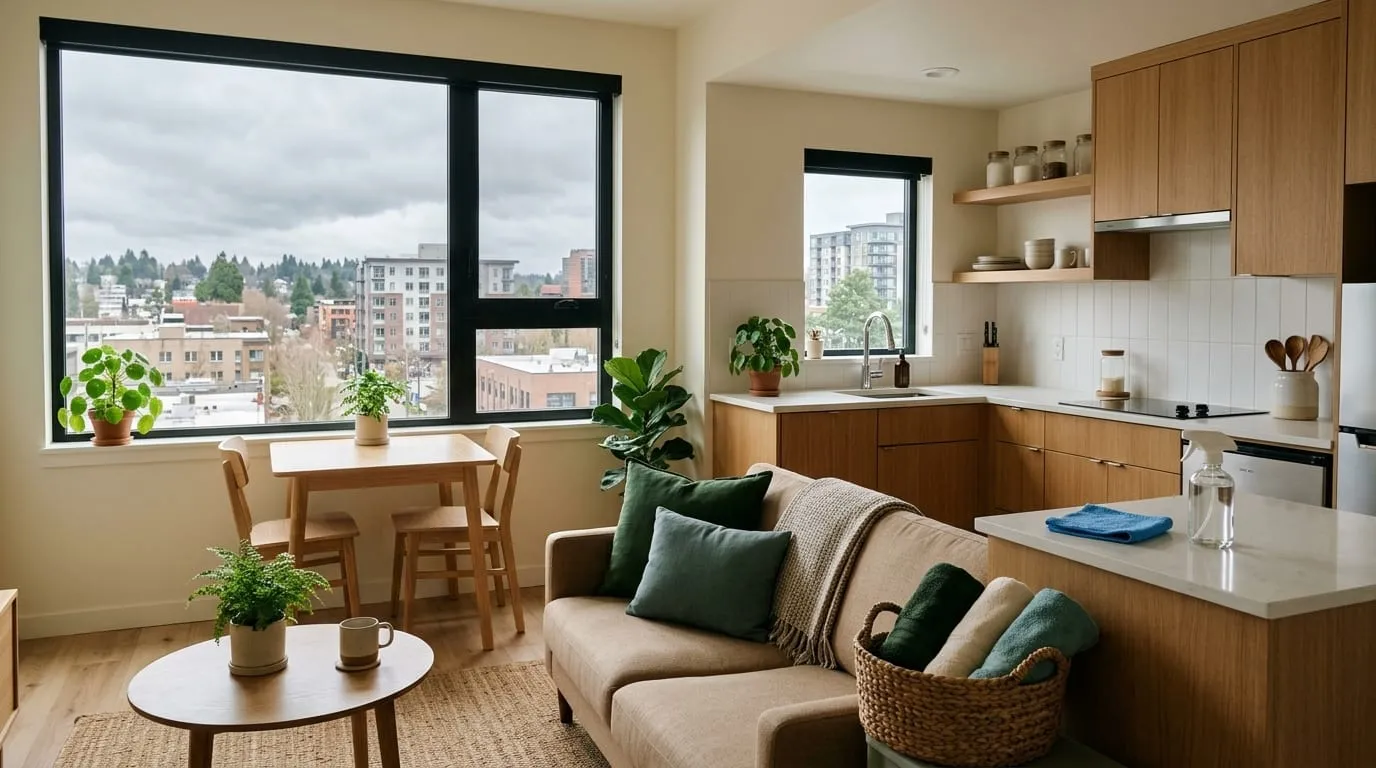
Keep an apartment clean with four layers of habit: 10 to 15 minutes of daily resets, one weekly pass through every room, a short monthly list for the spots weekly cleaning skips, and a seasonal checklist for vents, windows, and moisture. Small spaces get dirty faster but clean faster too, so consistency matters more than marathon sessions.
- Daily resets (dishes, counters, a quick floor pass at the entry) keep a small space from tipping into chaos, because there is nowhere for clutter to hide.
- A weekly routine of about 60 to 90 minutes covers a typical one-bedroom; do it in the same order every time so it becomes automatic.
- Monthly and seasonal lists catch what weekly cleaning misses: fan grilles, window tracks, the fridge, under the bed, and moisture spots on exterior walls.
- In Washington, tenants must keep their unit as clean and sanitary as its conditions permit, while the landlord keeps the premises fit to live in and handles most repairs. When in doubt, report it in writing.
- Moving out is a different job with a different standard. Use a dedicated move-out checklist for that.
An apartment is easier to clean than a house in every way except one: it shows mess immediately. A sink of dishes is visible from the couch, a pile of shoes blocks the hallway, and a damp bathroom vents straight into the bedroom. This checklist is built for renters and condo owners doing ongoing upkeep, not a one-time scrub. It breaks the work into daily, weekly, monthly, and seasonal layers so nothing gets ignored and no single session eats your Saturday.
If you are moving out, you need a different standard and a different list. See the Seattle Apartment Move-Out Cleaning Checklist on our sister site.
Why apartments need their own routine
Small spaces concentrate everything. Cooking, sleeping, working, and drying laundry may all happen within a few hundred square feet, which means more grease on nearby surfaces, more moisture in the air, and more dust per square foot. Three features make apartment cleaning distinct:
- Fewer rooms, more overlap. A studio’s kitchen splatter lands on the sofa side table. Cleaning by zone (wet zone, living zone, sleep zone) works better than cleaning by room.
- Limited storage. Every cleaning product competes for space with food and towels. A short, versatile kit beats a cabinet full of specialty bottles. Our guide to cleaners, sanitizers, and disinfectants explains which types you actually need.
- Shared systems. Walls, ventilation, laundry rooms, and garbage areas are often shared, so some problems are yours to clean and some are yours to report.
The daily reset (10 to 15 minutes)
Daily tasks are not cleaning so much as preventing cleaning. Do them at the same time each day, such as after dinner, and they take less time than finding your keys in a messy room.
- Wash, load, or put away all dishes. Leave the sink empty.
- Wipe kitchen counters and the stovetop with a damp microfiber cloth.
- Put shoes, bags, and coats in their spots at the entry.
- Quick floor pass where dirt enters: shake the doormat or run a cordless vacuum over the first few feet inside the door.
- Squeegee or towel-dry the shower walls and run the bathroom fan after showering.
- Return stray items to their homes (a two-minute “everything off the floor” sweep).
- Take out trash or recycling if it is full or smells.
The bathroom fan habit matters more than it looks. The EPA’s indoor air guidance notes that kitchen and bathroom fans that exhaust to the outdoors increase ventilation and help remove pollutants, and its mold guide lists exhaust fans among the basic moisture controls.
The weekly checklist (60 to 90 minutes for a one-bedroom)
Work top to bottom and dry to wet: dust before you vacuum, and clean the bathroom and kitchen last so you are not tracking cleaner residue onto clean floors. Always follow the product label for dwell times, and never mix products.
Kitchen
- Clean the sink basin and faucet, including the base where grime collects.
- Wipe appliance fronts, handles, and the microwave interior.
- Degrease the stovetop and the backsplash behind it.
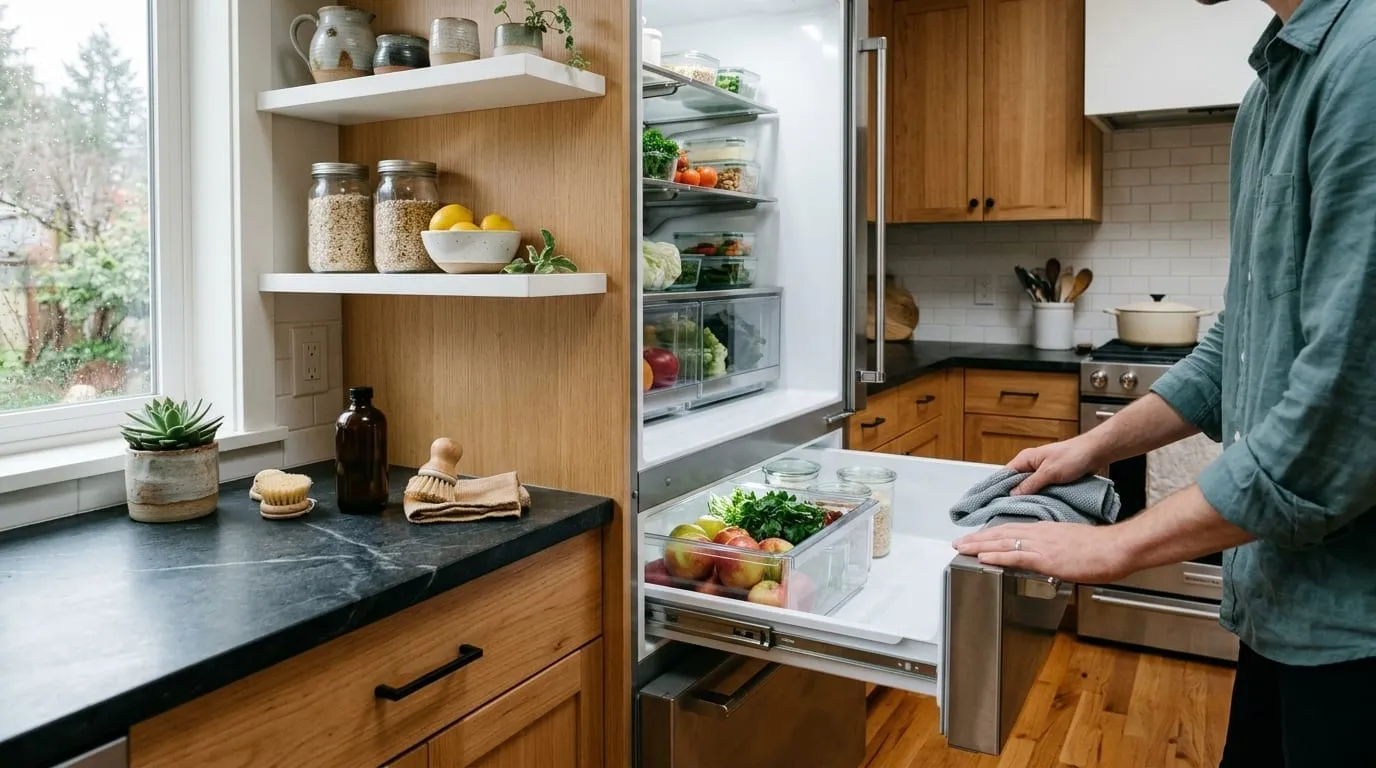
- Toss expired food and wipe the fridge shelf that needs it most.
- Wash or replace the sponge, dish brush, and dish towels.
Bathroom
- Clean the toilet bowl, seat, hinges, and base.
- Scrub the shower or tub, paying attention to corners and the caulk line.
- Clean the mirror and sink, then wipe faucets dry to limit mineral spotting. If spots have already built up, see how to remove hard water stains.
- Swap towels and the bath mat.
Living and sleeping areas
- Dust flat surfaces, electronics, and window sills.
- Change bed linens.
- Vacuum rugs and floors, including under the edges of furniture.
- Damp-mop hard floors with a well-wrung mop. Our guide to cleaning floors in a wet climate covers what each floor type tolerates.
Laundry
- Clean the lint filter on every dryer load (ENERGY STAR calls this an important safety measure as well as an efficiency one).
- Leave a front-loading washer door open after use so the gasket can dry.
The monthly checklist (about 1 to 2 hours, spread out)
Pick one weekend a month, or tack one or two items onto each weekly session.
| Task | Why it matters in an apartment | Approximate time |
|---|---|---|
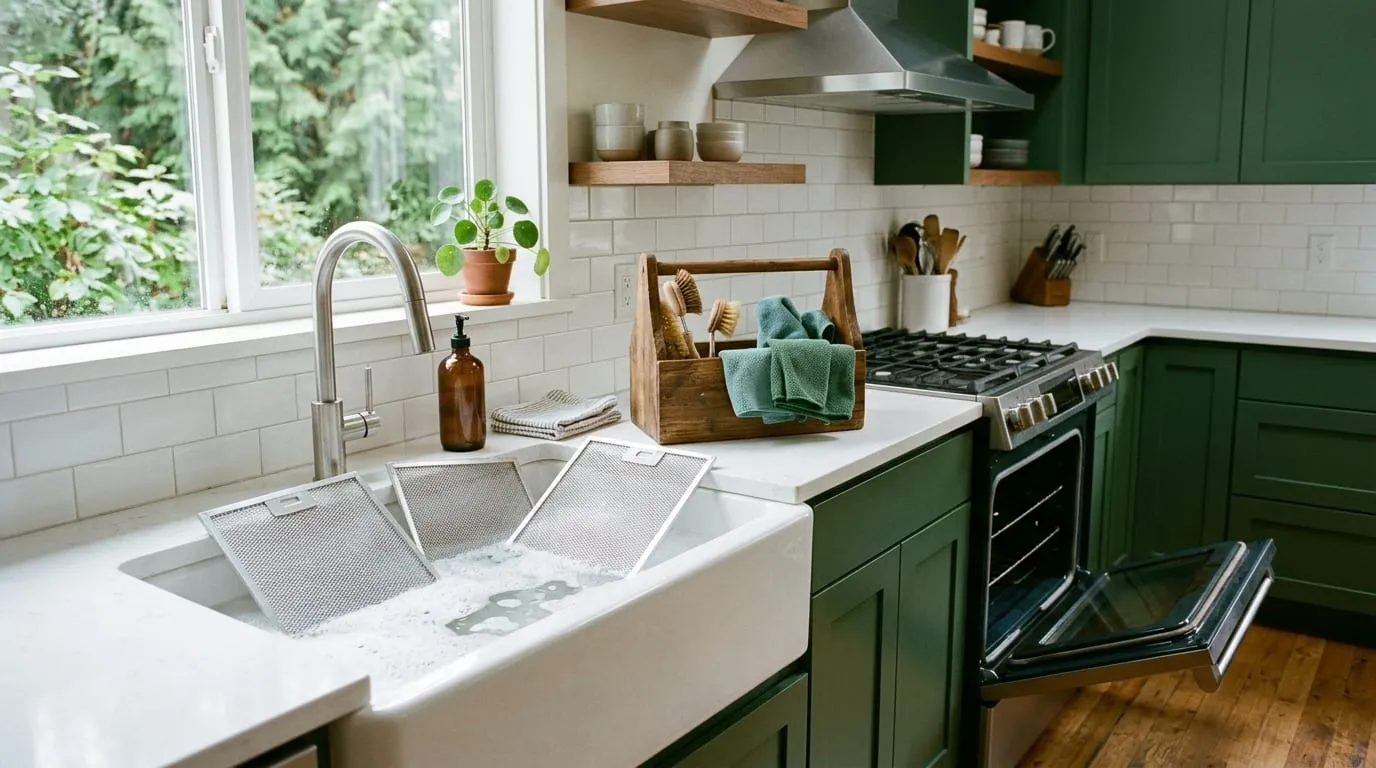
| Wipe bathroom and kitchen fan grilles | Dusty grilles move less air, so moisture lingers | 10 min |
| Clean inside the microwave and oven door glass | Grease odors travel fast in open layouts | 15 to 20 min |
| Vacuum under the bed and sofa | Dust collects where air does not move | 15 min |
| Wipe baseboards and door frames | Scuffs and dust in tight hallways show quickly | 20 min |
| Clean window tracks and sills | Condensation plus dust becomes grime | 15 min |
| Pull items an inch or two away from exterior walls and check behind them | Cool exterior walls are where mildew starts | 10 min |
| Deodorize and wipe the trash can | Small kitchens amplify smells | 10 min |
| Wash shower curtain liner or clean the glass door thoroughly | Soap film and mildew build up between weekly cleans | 15 min |
| Test the smoke alarm button | A quick safety check while you are up on a step stool | 2 min |
The seasonal checklist
Seattle’s damp months change the job. From October through April, the priority shifts to moisture, entry dirt, and window condensation. Our guide to keeping your home clean during Seattle’s rainy season goes deeper.
- Fall: set up a wet-gear spot by the door, wash or replace entry mats, check window weatherstripping for gaps, and clean window tracks before condensation season.
- Winter: wipe window condensation in the morning, check closet corners on exterior walls for musty smells, and keep the bathroom fan running long enough to clear the mirror.
- Spring: wash windows inside, launder curtains or wipe blinds, vacuum radiator or baseboard heater fins (with the heat off and cool), and clear out the coat closet.
- Summer: clean behind and under the fridge if you can reach safely, wash pillows and duvets per their care labels, and deep clean the oven before holiday cooking season returns.
The EPA recommends keeping indoor relative humidity below 60 percent, ideally between 30 and 50 percent. An inexpensive humidity meter on a bookshelf tells you whether your ventilation habits are working.
Small-space strategies that save the most time
- One caddy, one cloth stack. Keep everything for the weekly routine in a single carry caddy under the sink. If it does not fit, you probably do not need it.
- Clean by zone, not by room. In a studio, the “wet zone” (kitchen and bath) gets the most frequent attention, while the living and sleep zone mostly needs dusting and floors.
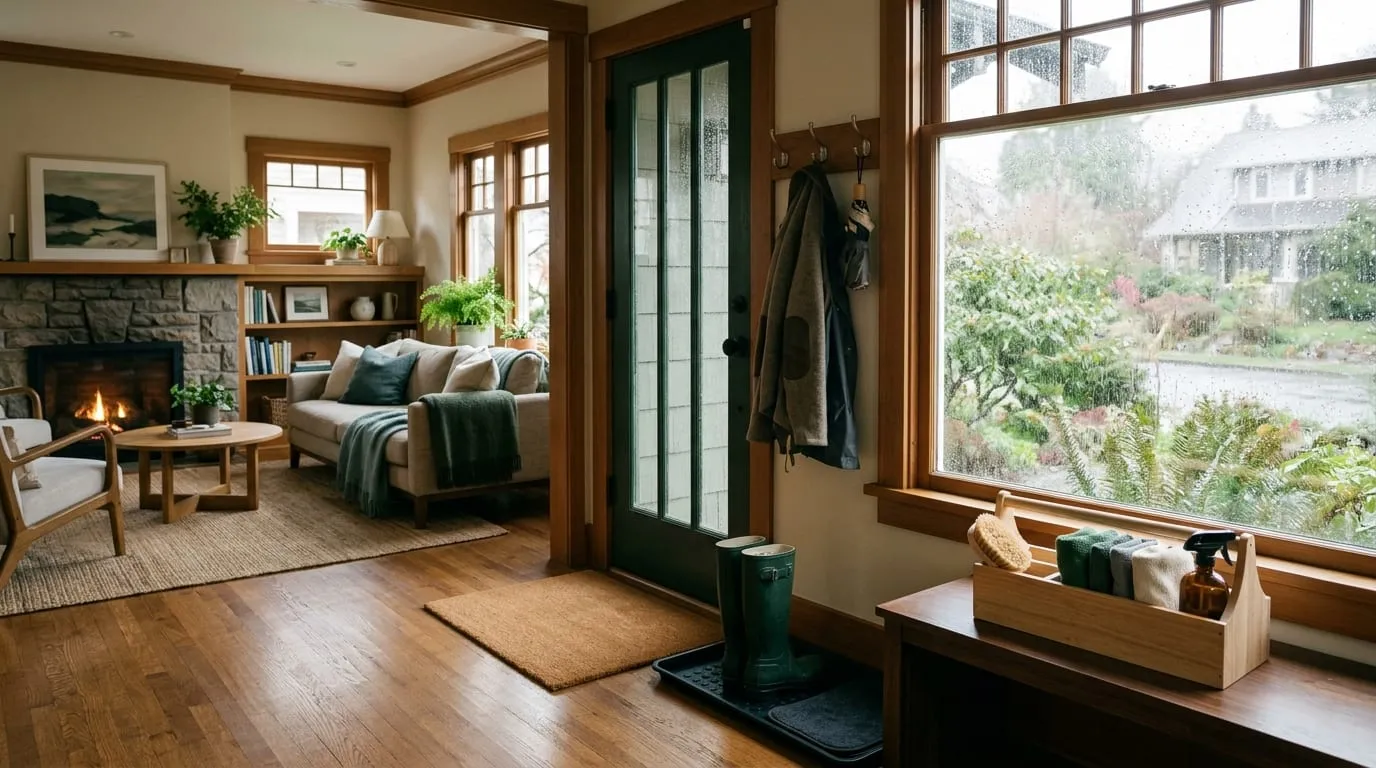
- Use vertical storage at the entry. Hooks and a narrow boot tray keep wet gear off the floor and contain grit near the door.
- Contain paper and mail. A single tray or wall pocket stops flat surfaces from disappearing.
- Keep a hamper per person. Clothes on chairs make a small room feel dirty even when it is clean.
- Cook with the fan on. Range hood fans in apartments are often small, so turn them on before the pan heats up, not after the smoke alarm complains.
Shared walls, shared laundry, and neighbors
Apartment living means some of your cleaning affects other people.
- Noise: run the vacuum and laundry at reasonable hours. Check your building’s quiet hours.
- Shared laundry rooms: remove your clothes promptly, clean the lint filter, wipe detergent drips, and report broken machines to management rather than working around them.
- Garbage and recycling rooms: break down boxes and bag trash fully. Leaking bags attract pests that do not respect unit boundaries.
- Odors: strong cleaning product smells can travel through shared ventilation. Ventilate while you clean and choose the mildest product that does the job.
Your job vs. the landlord’s job
This is general information, not legal advice, and your lease may add specifics. Washington’s Residential Landlord-Tenant Act divides responsibilities roughly like this:
| Usually your job (tenant or occupant) | Usually the landlord’s job | Report in writing if you see it |
|---|---|---|
| Routine cleaning of your unit | Keeping the premises fit for human habitation | Leaks, drips, or water stains |
| Disposing of your garbage and recycling properly | Repairs, except conditions from ordinary use | Mold that returns after cleaning |
| Avoiding intentional or negligent damage | Building systems such as plumbing and heating | Broken exhaust fans |
| Ordinary upkeep like replacing light bulbs (check your lease) | Shared building areas | Pests |
Under RCW 59.18.130, a tenant must keep the part of the premises they occupy and use “as clean and sanitary as the conditions of the premises permit,” and must not intentionally or negligently damage it. Under RCW 59.18.060, the landlord must keep the premises fit for human habitation and make repairs, except for conditions caused by wear resulting from ordinary use. In practice: clean what you live in, and report what is broken or chronically wet. Condo owners follow their association’s rules for common areas instead.
Scenario: studio vs. two-bedroom
The following is an illustrative example, not a measurement.
Consider a 450-square-foot studio with one occupant who works from home. The kitchen, desk, and bed share one room, so cooking residue and dust reach everything. A workable plan:
- Daily: 10 minutes (dishes, counters, a quick entry sweep, bathroom fan after showers).
- Weekly: about 60 minutes in one session, done in this order: dust, bathroom, kitchen, floors.
- Monthly: one item from the monthly table each week, rotating, so no single session runs long.
Now consider a two-bedroom apartment shared by two roommates, roughly 900 square feet, with two baths. Square footage doubles, but the bigger change is coordination.
- Daily: each person resets their own dishes and gear; the shared kitchen gets a two-minute counter wipe from whoever cooked last.
- Weekly: split by zone instead of alternating weeks. Person A takes kitchen and living area; Person B takes both bathrooms and the hallway. Each person cleans their own bedroom. Estimated 45 to 60 minutes each.
- Monthly: list the monthly tasks on a shared note and claim them by name.
The studio’s risk is that mess spreads to everything; the two-bedroom’s risk is that shared spaces belong to nobody. Write the plan down either way. If you want help picking a frequency for bigger resets, see how often to deep clean.
Common mistakes in apartment cleaning
- Skipping the fan. Moisture from one shower and one pot of pasta goes a long way in a small space.
- Over-stocking products. More bottles mean more clutter, more chance of mixing something by accident, and more fumes in a small room.
- Cleaning in random order. Mopping before dusting means doing the floor twice.
- Ignoring exterior walls. Furniture pushed flat against a cold wall is a classic spot for hidden mildew.
- Fixing building problems yourself. A constantly damp window frame or a dripping pipe is a report, not a cleaning task.
The one-page version
If you remember nothing else:
- Every day: empty sink, clear counters, dry the shower, fan on.
- Every week: dust, bathroom, kitchen, floors, linens, in that order.
- Every month: one hidden spot per week (fan grilles, under the bed, window tracks, behind furniture).
- Every season: prepare for rain in fall, fight condensation in winter, open things up in spring.
- Always: report leaks and recurring mold in writing.
For a whole-home version of this routine, room by room, see the complete Seattle house cleaning guide.
Common questions
How long should it take to clean a one-bedroom apartment each week?
Most people land somewhere around an hour to an hour and a half once the routine is familiar, assuming daily resets are happening. The first few weeks run longer because you are catching up on buildup. If it routinely takes much longer, the monthly list is probably overdue.
Do I have to clean the shared laundry room or hallway in my building?
Generally no. In Washington, the landlord is responsible for keeping shared areas in reasonable condition, and the tenant's cleaning duty covers the part of the premises the tenant occupies and uses. Courtesy still applies: remove your lint, wipe up your own spills, and report problems to management in writing.
What is the single most useful cleaning tool for a small apartment?
A stack of washable microfiber cloths. They handle dusting, counters, glass, and bathroom fixtures with water or a mild cleaner, take almost no storage space, and go straight into the laundry. A compact cordless vacuum is a close second if your floors are mostly hard surfaces.
Should I tell my landlord about mold or a leak, or just clean it?
Clean small surface spots that come from everyday moisture, like a mildewed caulk line, but report leaks, recurring wet spots, or mold that comes back quickly. Those usually point to a building issue, and putting the report in writing creates a record.
Sources and references
- RCW 59.18.130: Duties of tenant , Washington State Legislature Primary source Accessed November 15, 2026
- RCW 59.18.060: Landlord, duties , Washington State Legislature Primary source Accessed November 15, 2026
- A Brief Guide to Mold, Moisture and Your Home , U.S. Environmental Protection Agency Primary source Accessed November 15, 2026
- The Inside Story: A Guide to Indoor Air Quality (Care for Your Air) , U.S. Environmental Protection Agency Primary source Accessed November 15, 2026
- Clothes Dryers , ENERGY STAR (U.S. EPA and Department of Energy) Primary source Accessed November 15, 2026
See something out of date or wrong? Tell the editors. Read how we work in our editorial policy.